Print-on-Demand Guide: How to Sell Custom T-Shirts, Mugs, and More
September 30, 2026
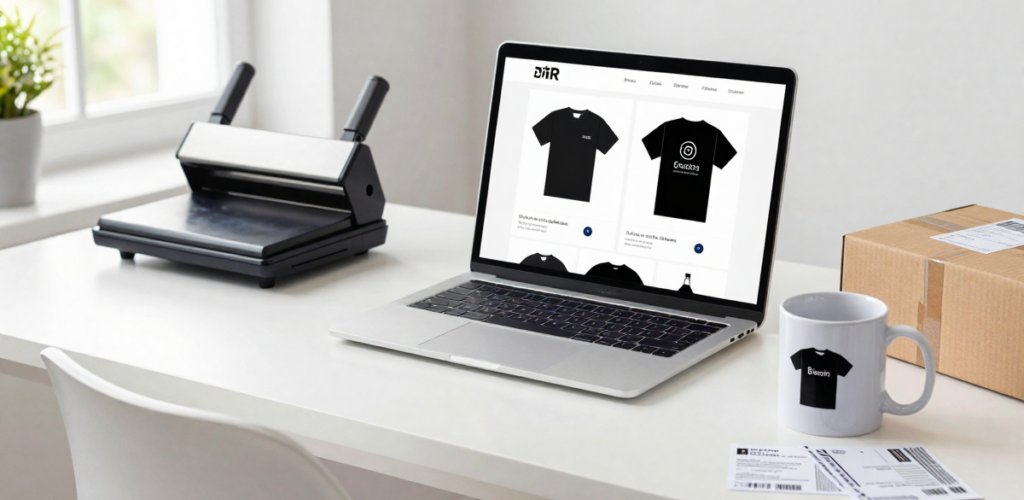
What if you could sell custom t-shirts, mugs, and hoodies online — without ever touching inventory, renting warehouse space, or placing a bulk order? That’s exactly what the print-on-demand business model makes possible, and in 2026, it’s more accessible than ever.
Print-on-demand (POD) is one of the fastest-growing segments in eCommerce, with the global custom merchandise market projected to continue its explosive upward trajectory. Whether you’re a creative entrepreneur, a side hustler looking for passive income, or a complete beginner with zero business experience, POD offers a low-risk entry point into the world of online selling.
In this complete print-on-demand guide, you’ll learn exactly how to start a print-on-demand business from scratch — including how to choose a niche, create designs that sell, pick the right POD platform, set up your store, and market your products for maximum profit. Let’s dive in.
What Is Print-on-Demand (POD)?
Print-on-demand is an order fulfillment method where products are printed and shipped only after a customer places an order. You never pre-purchase inventory or handle shipping yourself. Instead, a third-party POD supplier handles all of that behind the scenes.
Here’s the simple flow:
- Customer places an order in your online store
- Your POD platform receives the order automatically
- The product is printed and packaged at a fulfillment center
- It’s shipped directly to your customer under your brand name
Popular POD products include custom t-shirts, personalized mugs, hoodies, tote bags, phone cases, posters, stickers, leggings, and even home décor items.
POD vs. Traditional eCommerce: In traditional eCommerce, you buy products in bulk, store them, and ship them yourself. With print-on-demand, there’s no upfront inventory cost, no storage fees, and no minimum order quantity. The tradeoff is slightly lower profit margins per unit — but the dramatically reduced risk makes POD one of the most beginner-friendly business models available today.
Why Start a Print-on-Demand Business in 2026?
The POD industry isn’t just surviving — it’s thriving. Here’s why now is still a great time to start:
- Low startup costs: You can technically start a print-on-demand business with no money upfront. Most POD platforms are free to join, and you only pay production costs after you make a sale.
- No inventory risk: You’ll never get stuck with unsold products sitting in a garage. Every item is made to order.
- Scalability: Add new designs, expand into new niches, and scale your product catalog without increasing overhead.
- Passive income potential: Once your store and listings are set up and optimized, sales can come in around the clock — even while you sleep. (Realistic note: this takes time, consistency, and marketing effort to achieve.)
- Growing demand for custom merchandise: Consumers increasingly want personalized, unique products. That trend is only accelerating.
For side hustlers, creators, artists, and entrepreneurs, the print-on-demand business model checks a lot of boxes.
How Print-on-Demand Works: Step-by-Step
Ready to get started? Here’s exactly how to launch your POD business from the ground up.
Step 1 – Choose a Niche
The biggest mistake beginners make is trying to sell to everyone. The most profitable print-on-demand stores are laser-focused on a specific audience.
A niche is a defined group of people who share a common interest, identity, or passion. When you design products specifically for them, you dramatically increase your chances of making sales.
Profitable POD niche examples:
- Fitness and gym culture
- Dog and cat owners (by breed works especially well)
- Teachers and educators
- Nurses and healthcare workers
- Gardeners, hikers, and outdoor enthusiasts
- Funny slogans for specific professions
- Pop culture fandoms (be careful with copyright here)
How to validate niche demand:
- Search Etsy for your niche + “shirt” or “mug” and see if listings have reviews
- Use Google Trends to check interest over time
- Browse Amazon Merch on Demand bestsellers
- Check TikTok and Pinterest for trending merchandise ideas
The more passionate and specific your target audience, the better your chances of building a loyal customer base.
Step 2 – Create Designs
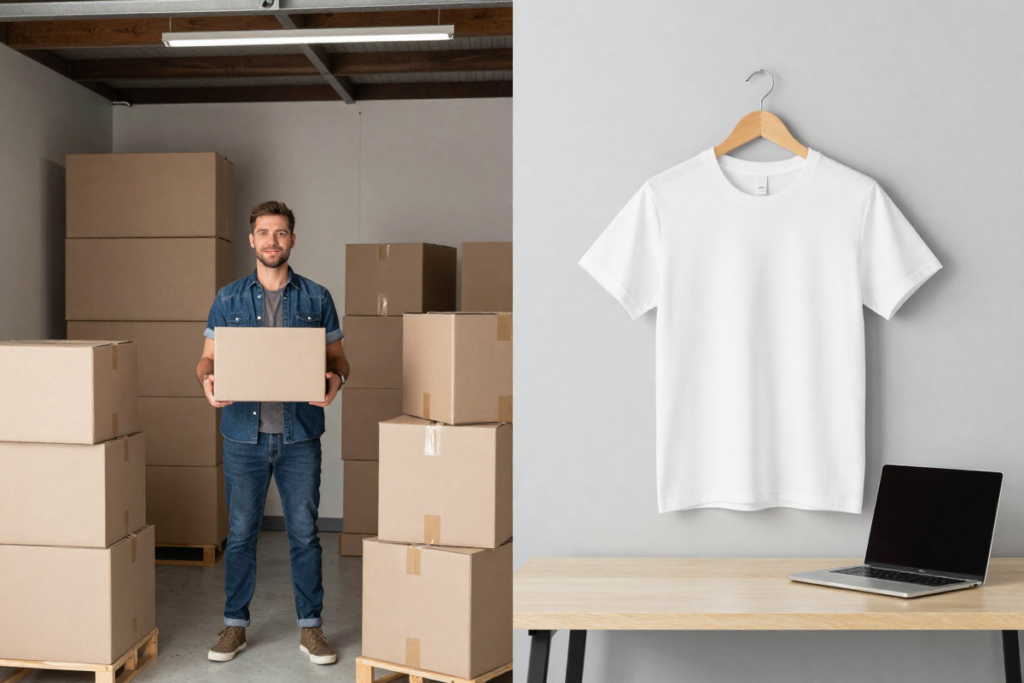
You don’t need to be a professional designer to sell custom products online — but you do need designs that resonate with your niche audience.
DIY design options:
- [AFFILIATE LINK PLACEHOLDER – Canva Pro] — Canva is beginner-friendly and has thousands of customizable t-shirt and mug templates. Their free plan works for getting started, but the Pro version unlocks significantly more assets.
- Adobe Illustrator — Industry-standard for professional vector designs. Better for those with design experience.
- [AFFILIATE LINK PLACEHOLDER – Creative Fabrica] — A subscription-based library of fonts, graphics, and design elements ideal for POD sellers.
Hiring designers: Platforms like Fiverr and Upwork let you hire affordable freelance designers if you’d rather outsource.
What makes a POD design sell:
- It speaks directly to the niche’s identity or humor
- It uses bold, legible typography
- It’s simple enough to print clearly on fabric or ceramic
- It taps into an emotion: pride, humor, belonging, or nostalgia
Important: Always use original designs or properly licensed graphics. Never use copyrighted logos, trademarked phrases, or celebrity names without permission.
Step 3 – Select a POD Platform
Your POD platform is the engine behind your business — it produces and ships your products. Here’s a quick overview of the most popular options:
| Platform | Best For | Key Strength |
|---|---|---|
| [Printify] | Beginners & budget sellers | Largest supplier network, competitive pricing |
| [Printful] | Brand-focused sellers | Premium quality, reliable fulfillment |
| Redbubble | Artists & creatives | Built-in marketplace, no store setup needed |
| TeeLaunch | Creators & professionals | T-shirts to Custom Metal |
| Gelato | Global sellers | Local printing in 30+ countries for faster shipping |
Printify vs. Printful: This is one of the most common questions beginners ask. Printify offers lower base costs because it connects you with a network of third-party printers. Printful owns its own production facilities and tends to have more consistent quality — but at slightly higher prices. Both integrate seamlessly with Shopify and Etsy.
Step 4 – Set Up Your Store
You have three main options for where to sell your print-on-demand products:
Etsy — The fastest way to get eyes on your products. Etsy has a built-in audience actively searching for custom and handmade goods. Print on demand on Etsy is fully allowed, as long as you’re transparent about the production process. Listing fees are low ($0.20 per listing), but Etsy takes a transaction fee on each sale.
Shopify — The best option for building a standalone brand. [START HERE – Shopify] integrates directly with both Printify and Printful, making order fulfillment completely automated. You have full control over your store’s look, feel, and customer experience. Monthly subscription starts at a low entry cost with a free trial available.
Marketplaces (Redbubble, Merch by Amazon) — These platforms handle everything, including marketing, in exchange for lower royalties. Great for passive exposure but less control over branding.
Branding basics before you launch:
- Choose a memorable store name that reflects your niche
- Create a simple logo (Canva works great for this)
- Write a clear “About” section that connects with your target audience
- Keep your color palette and aesthetic consistent
Step 5 – Connect Products & Publish Listings
Once your store is set up and connected to your POD platform, it’s time to add products.
Mockups: Use your POD platform’s built-in mockup generator to create realistic product images. High-quality mockups are essential — they’re what customers use to evaluate your product before buying. Lifestyle mockups (showing the product being worn or used in a real setting) typically outperform flat lay shots.
Writing SEO-optimized product descriptions:
- Lead with your primary keyword (e.g., “Funny Dog Mom T-Shirt”)
- Describe the product’s benefits, not just its features
- Include details like material, fit, and care instructions
- Use natural language that answers buyer questions
Pricing strategy: We’ll cover this in detail below, but a general rule is to aim for a 30–50% profit margin after base cost and platform fees.
Step 6 – Fulfillment & Shipping
One of the biggest perks of the POD business model is that fulfillment is almost entirely hands-off. When a customer orders, the POD platform:
- Receives the order automatically
- Prints and quality-checks the product
- Packages it (often with your branding if you use Printful)
- Ships it directly to the customer
Average production times: Most POD orders are produced within 2–7 business days, with shipping on top of that. Set clear expectations in your store’s shipping policy to avoid customer service issues.
Returns and refunds: POD products are made to order, so most platforms don’t accept returns for buyer’s remorse. However, they will reprint or refund items with print errors or quality defects. Make sure your store policies reflect this clearly.
Best Print-on-Demand Products to Sell in 2026
Not all products are created equal. Here are the best-sellers in the POD space right now:
- T-shirts — The undisputed king of POD. High demand, countless niche opportunities, and strong profit margins.
- Mugs — Extremely popular as gifts. Custom mugs sell well year-round but spike around holidays.
- Hoodies and sweatshirts — Higher price point means better profit per sale, especially in fall and winter.
- Tote bags — Trending upward as eco-conscious shopping grows.
- Phone cases — High-margin, low-weight, and easy to personalize.
- Seasonal products — Christmas ornaments, Valentine’s Day gifts, and Halloween designs can generate significant seasonal income if you plan ahead.
How to Design Products That Actually Sell
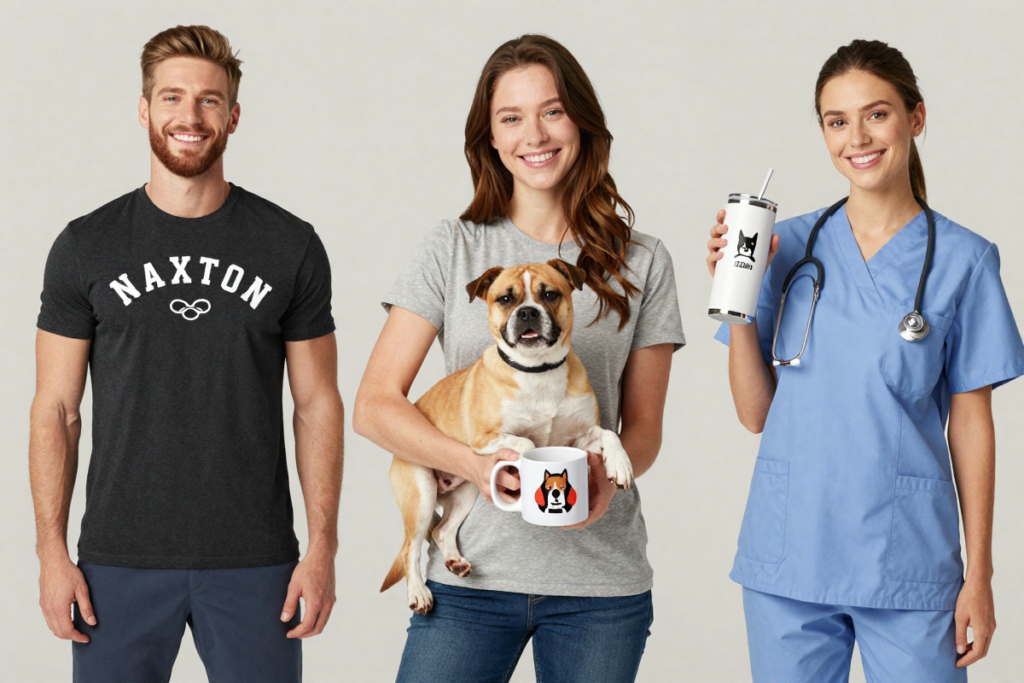
Great designs are the difference between a store that thrives and one that sits ignored. Here’s how to create designs your target audience will actually buy:
Understand your audience first. Before you open Canva, ask yourself: What does my ideal customer care about? What would make them laugh, feel proud, or feel seen?
Research trends actively:
- Browse Etsy’s bestseller lists in your niche
- Follow relevant hashtags on Pinterest and TikTok
- Use tools like [Erank or Marmalead] for Etsy keyword and trend research
Typography and color tips:
- Use no more than two fonts per design
- High-contrast designs print more cleanly (dark on light or light on dark)
- Avoid thin lines and gradients, which can look muddy when printed
- Bold, readable text tends to outperform complex illustrations for beginners
Common design mistakes to avoid:
- Using clip art or low-resolution images (minimum 300 DPI for print)
- Overloading the design with too many elements
- Ignoring print area boundaries
- Copying other sellers’ designs (a surefire way to get your shop shut down)
Pricing Strategy: How to Stay Competitive and Profitable
Pricing your POD products correctly is one of the most important skills you’ll develop as a seller.
Understanding your cost breakdown:
- Base cost: What the POD platform charges to produce the item (e.g., $8–12 for a t-shirt)
- Platform fees: Etsy takes ~6.5% transaction fee + listing fees; Shopify charges a monthly subscription
- Shipping: Either passed to the customer or factored into your price
- Your profit: What’s left after all costs
Suggested profit margins: Aim for at least $5–10 profit per item at minimum. Many successful POD sellers target 30–50% margins.
Psychological pricing tactics:
- Price at $24.99 instead of $25 (charm pricing)
- Bundle products (e.g., “Buy 2 mugs, save 15%”) to increase average order value
- Position slightly above the lowest-priced competitor to signal quality
When to run discounts: Use sales strategically around holidays (Black Friday, Christmas, Valentine’s Day) or to clear designs that aren’t converting. Avoid constant discounting, which can devalue your brand.
How to Market Your Print-on-Demand Store
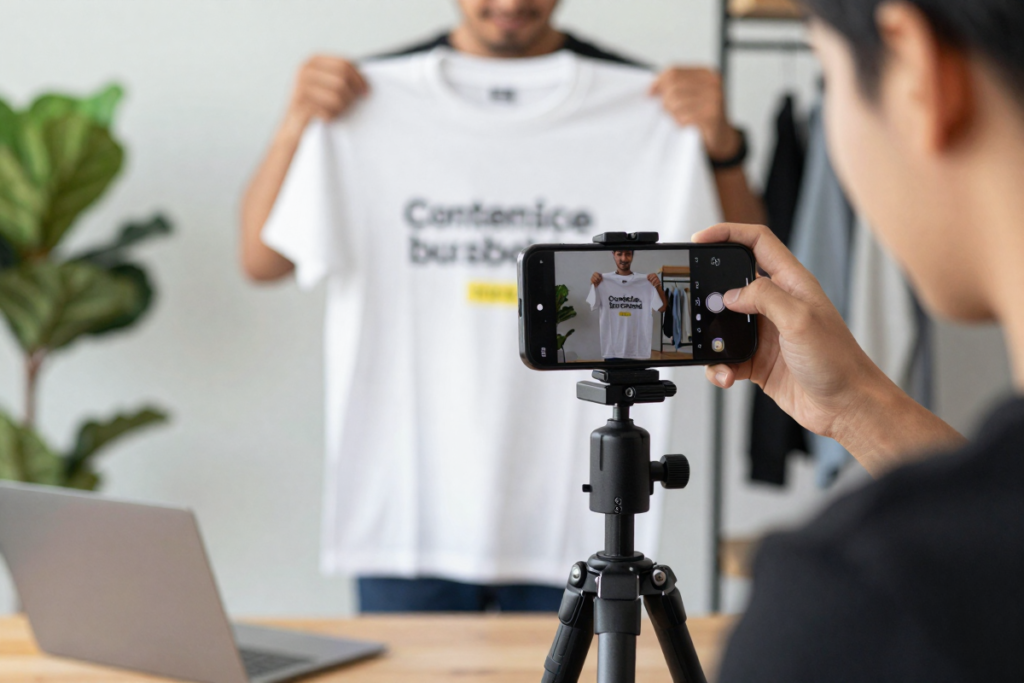
The best products in the world won’t sell themselves. Here’s how to drive traffic and generate sales.
Free Traffic Methods
TikTok content strategy: TikTok is arguably the most powerful free marketing channel for POD sellers right now. Post behind-the-scenes videos of your design process, “shop with me” content, or satisfying unboxing videos. Niche-specific content that makes your target audience laugh or feel something can go viral quickly.
Instagram Reels: Similar to TikTok — short-form video featuring your products in lifestyle settings performs best. Use niche-specific hashtags to reach your target audience organically.
Pinterest SEO: Pinterest functions as a visual search engine, making it ideal for print-on-demand marketing. Create keyword-rich pins for each of your products and link them directly to your store. Pins have a long shelf life, meaning content you create today can drive traffic months from now.
Organic SEO (blogging): If you have a blog (like this one!), create content targeting long-tail keywords like “best gifts for dog moms” or “funny nurse gifts” — then link directly to your products. (See our [INTERNAL LINK PLACEHOLDER – eCommerce side hustle guide] for more on blogging for product sales.)
Paid Advertising
Facebook and Instagram ads: These platforms offer powerful targeting options that let you reach people based on their interests, behaviors, and demographics. Start with a small budget ($5–10/day) and test multiple creative variations before scaling.
TikTok ads: TikTok’s ad platform is growing rapidly and often delivers lower cost-per-click than Meta for younger demographics. Native-style video ads (that look like organic content) tend to perform best.
Budget recommendations for beginners: Don’t invest in paid ads until you’ve validated your designs organically. Start with at least $100–$200 as a test budget and analyze results before scaling.
Influencer Marketing
Micro-influencers (accounts with 5,000–50,000 engaged followers in your niche) can be incredibly effective — and often more affordable than larger influencers. A fitness influencer wearing your gym humor t-shirt, or a dog account featuring your custom pet mug, can drive immediate, targeted sales.
How to reach out: Keep your pitch short and personalized. Offer a free product in exchange for an honest post or story. Track results with a unique discount code.
SEO Tips for Print-on-Demand Listings
Whether you’re selling on Etsy or your own Shopify store, SEO is essential for long-term organic traffic.
- Keyword research: Use tools like Erank for Etsy or the free Google Keyword Planner for your own store. Target long-tail keywords with clear buyer intent (e.g., “funny cat mom coffee mug” rather than just “mug”). *PRO TIP: Use both tools for the best results.
- Optimize your title: Lead with your most important keyword. Be descriptive: “Funny Dog Mom T-Shirt – Gift for Dog Lovers – Unisex Graphic Tee” is far more searchable than “Dog Shirt.”
- Product descriptions: Write for humans first, search engines second. Answer the questions a buyer would have: What’s it made of? How does it fit? Who is it perfect for?
- Alt text for mockup images: Always fill in the alt text field with a keyword-rich description of the image. This boosts accessibility and helps search engines index your visual content.
Common Mistakes to Avoid in Print-on-Demand
Learning from common pitfalls can save you months of frustration:
- Choosing too broad a niche: “Funny shirts” is not a niche. “Funny shirts for emergency room nurses” is.
- Ignoring branding: Customers buy from stores they trust. A cohesive brand identity builds that trust.
- Poor design quality: Low-resolution, cluttered, or derivative designs will be ignored — or worse, reported.
- Overpricing or underpricing: Both hurt you. Too cheap signals low quality; too expensive loses price-sensitive shoppers.
- Not testing products: Order samples of your own products before selling them. You need to see and feel what your customers will receive.
How Much Money Can You Make with Print-on-Demand?

Let’s be honest about income expectations — because you deserve a realistic picture.
Beginners (months 1–3): Most new POD sellers make little to nothing at first. This is normal. You’re learning, testing designs, and building an audience.
Intermediate sellers (months 4–12): With consistent effort, optimized listings, and active marketing, earning $500–$2,000/month is achievable for dedicated sellers.
Advanced sellers: Established POD stores with strong branding, large design catalogs, and effective marketing can generate $5,000–$20,000+/month. Some sellers have built six-figure annual businesses through POD alone.
Real-world example: A seller focused exclusively on the nursing niche launches 50 designs across mugs and t-shirts on Etsy. After six months of consistent SEO optimization and Pinterest marketing, they’re generating 80–120 sales per month at $8 profit each — that’s $640–$960/month in relatively passive income.
Can print-on-demand be a full-time income? Yes — but it typically takes 12–24 months of consistent effort to reach that level.
Best Tools & Resources for Print-on-Demand
Here are the tools serious POD sellers use to grow their businesses:
Design Tools:
- Canva Pro — Best for beginners; drag-and-drop design with POD templates
- Adobe Illustrator — Best for professional vector artwork
- Creative Fabrica — Subscription graphics library for POD designs
POD Platforms:
- Printify — Best for low-cost production and wide product variety
- Printful — Best for premium quality and brand consistency
eCommerce Platforms:
- Shopify — Best for building your own branded store
- Etsy — Best marketplace for getting organic traffic quickly
Keyword & Research Tools:
- Erank — Etsy SEO and keyword research
- Google Keyword Planner — Free keyword research for blog and store SEO
- Marmalead — Advanced Etsy market research tool
Is Print-on-Demand Worth It in 2026?
Yes — with the right expectations. Here’s the honest summary:
| Pros | Cons |
|---|---|
| No inventory or upfront costs | Lower margins than bulk production |
| Beginner-friendly setup | Competitive market requires differentiation |
| Scalable with minimal overhead | Quality control varies by supplier |
| Passive income potential | Takes time to build momentum |
| Sell globally from anywhere | Shipping times can be slower than Amazon |
Who should start a print-on-demand business:
- Creative entrepreneurs who want to monetize their design ideas
- Side hustlers looking for income with minimal startup investment
- Content creators who want to sell branded merchandise to their audience
- Beginners in eCommerce who want to learn without major financial risk
Final recommendation: If you’re willing to invest time into niche research, quality designs, and consistent marketing, print-on-demand is absolutely worth pursuing in 2026. The barrier to entry is low, the ceiling is high, and the tools available today make it easier than ever to build a real business.
Final Thoughts: Ready to Start Your Print-on-Demand Business?
Starting a print-on-demand business is one of the most accessible ways to generate online income — but like any business, success comes to those who commit to learning, testing, and improving over time.
Here’s a quick recap of the steps to get started:
- Choose a specific, passionate niche
- Create high-quality, original designs
- Select the right POD platform for your goals
- Set up your store on Etsy or Shopify
- Publish optimized product listings
- Market consistently through free and paid channels
- Analyze, refine, and scale what works
The perfect time to start is now. Sign up for Printify or Printful, open a free Canva account, and publish your first product this week.
(Looking for more ways to build income online? Check out our How to Start an eCommerce Business with No Money (Step-by-Step Guide for Beginners) and Learn How AI Can Help You Write Product Title & Descriptions.)
Frequently Asked Questions About Print-on-Demand
Can I start a print-on-demand business with no money?
Yes. Most POD platforms are free to join, Etsy listings cost just $0.20 each, and you can design using Canva’s free plan. You can genuinely start a POD business for under $5.
What is the best print-on-demand company for beginners?
Printify and Printful are both excellent for beginners. Printify offers lower base costs, while Printful offers more consistent quality. Many sellers use both simultaneously.
Does Etsy allow print-on-demand products?
Yes. Etsy allows POD products as long as you designed them yourself and clearly disclose the production partner in your listings.
How long does print-on-demand shipping take?
Production typically takes 2–7 business days, plus shipping time. Domestic orders usually arrive within 5–10 business days total.
Can I use AI to create designs for print-on-demand?
Yes, AI-generated designs are increasingly popular in the POD space. Tools like Midjourney and Adobe Firefly can help you generate unique artwork — just be sure to check each platform’s policies on AI-generated content before listing.
What are the best-selling print-on-demand products?
T-shirts and mugs consistently top the charts, followed by hoodies, tote bags, phone cases, and wall art. Seasonal products (Christmas, Valentine’s Day) can generate significant spikes in revenue.