Etsy vs. eBay: Which Platform Is Better for Handmade or Vintage Items?
November 24, 2026

The digital marketplace has revolutionized how creators and collectors monetize their passions. Whether you are a jewelry maker crafting unique pieces in a home studio or a vintage hunter scouring estate sales for hidden gems, the question remains the same: where should you sell?
For years, two giants have dominated the conversation: Etsy vs. eBay.
Etsy has carved out a reputation as the go-to handcrafted goods marketplace, celebrated for its focus on creativity, uniqueness, and artisan products. eBay, on the other hand, is the grandfather of e-commerce, a massive global bazaar known for auctions, resale, and an unparalleled reach for collectibles.
If you are asking, “Should I sell my handmade stuff on Etsy or eBay?” or “Where do handmade items sell the fastest?” you aren’t alone. This guide is designed for handmade creators, vintage curators, and side hustlers who need a clear answer.
The truth is, there is no single “best” platform. The right choice depends entirely on your product type, your profit goals, and your selling style. In this deep dive, we will break down the fees, audience behavior, and logistics to help you decide the best platform to sell handmade items or vintage finds for your specific business.
Quick Comparison: Etsy vs. eBay
For those who need a quick answer, here is a high-level snapshot of how these two platforms stack up against each other.
| Feature | Etsy | eBay |
|---|---|---|
| Primary Focus | Handmade, Vintage (20+ years), Craft Supplies | Everything (New, Used, Vintage, Collectibles) |
| Fee Structure | Listing fee ($0.20), Transaction fee (6.5%), Payment processing | Insertion fees (varies), Final Value Fee (~13%), Payment processing |
| Audience | Shoppers seeking unique, personalized, emotional purchases | Deal hunters, collectors, bargain seekers |
| Listing Format | Fixed price (mostly) | Auction or Fixed Price (Buy It Now) |
| Brand Building | High (Customizable storefronts) | Low (Transactional focus) |
| Best For | Artisans, Makers, Boutique Vintage Sellers | Resellers, Flippers, High-Volume Sellers |
The Verdict: Choose Etsy if you are building a brand around handmade or high-end vintage items and want higher margins. Choose eBay if you are flipping items, selling common vintage goods, or want access to a massive global audience for quick turnover.
Platform Overview
To make an informed decision on selling handmade online, you first need to understand the DNA of each marketplace.
What is Etsy?
Etsy is a niche online seller marketplace designed specifically for the “maker economy.” It is a curated environment where the primary value proposition is uniqueness.
- Focus: Strictly handmade items, vintage goods (must be at least 20 years old), and craft supplies.
- Identity: It positions itself as an alternative to mass-produced retail. Buyers come here specifically to support small businesses and find one-of-a-kind gifts.
- Vibe: Community-driven, aesthetic-focused, and trust-based.
What is eBay?
eBay is a generalist e-commerce platform comparison giant. It is one of the largest marketplaces in the world, functioning as a digital flea market and auction house combined.
- Focus: Virtually anything can be sold, from used electronics to rare coins to vintage clothing.
- Identity: It is a utility player. People go to eBay to find a specific part for a vacuum cleaner, bid on a rare comic book, or buy a bulk lot of wholesale goods.
- Vibe: Transactional, competitive, and volume-driven.
Target Audience & Buyer Behavior

Understanding who is buying is just as important as what you are selling. This is a critical factor in any handmade product marketplace comparison.
Etsy Buyers: The Emotional Shopper
Etsy buyers are often looking for a story. They aren’t just buying a necklace; they are buying the story of the artisan who made it.
- Intent: They are looking for unique, personalized, or custom items.
- Price Sensitivity: Generally lower. Etsy shoppers are willing to pay a premium for craftsmanship and exclusivity.
- Behavior: They browse categories, look at shop policies, and read “About” sections. They are driven by emotion and aesthetics.
eBay Buyers: The Pragmatic Hunter
eBay buyers are often mission-driven. They have a specific item in mind or are looking for the best possible deal.
- Intent: They are looking for value, rarity, or specific specifications.
- Price Sensitivity: High. eBay is famous for its “Best Offer” button and auction formats. Buyers often compare prices across multiple listings instantly.
- Behavior: They use filters heavily (condition, price, location). They are comfortable with bidding wars and buying used items without returns.
Fees & Pricing Structure
One of the most searched queries is “Etsy fees vs eBay fees.” Understanding the cost of doing business is vital for your bottom line. Fees can eat into your margins if you aren’t careful.
A. Etsy Fees
Etsy’s fee structure is relatively simple but can add up.
- Listing Fee: $0.20 USD per item listed. This lasts for four months or until the item sells.
- Transaction Fee: 6.5% of the total sale price (including shipping).
- Payment Processing Fee: Varies by region (approx. 3% + $0.25 in the US).
- Offsite Ads: If Etsy advertises your product and it sells, they take an additional 12-15% fee.
B. eBay Fees
eBay’s structure is more complex due to its auction nature and store subscriptions.
- Insertion Fees: You get a certain number of free listings per month (usually 250). After that, it’s roughly $0.35 per listing.
- Final Value Fee: This is the big one. It is typically around 12.9% + $0.30 per order for most categories, though it varies by category (e.g., sneakers have different fees than electronics).
- Payment Processing: Included in the Final Value Fee (Managed Payments).
👉Managing fees across multiple platforms can be a nightmare. Use accounting software like Quickbooks for ecommerce to automatically track your expenses and calculate your true net profit.
Ease of Use & Setup
If you are looking at “selling on Etsy for beginners” versus “selling on eBay for beginners,” the learning curves differ significantly.
Etsy: The Boutique Experience
Etsy is designed for non-technical users.
- Setup: You can open a shop in under an hour. The interface is clean and intuitive.
- Branding: You can customize your shop banner, logo, and “About” section easily. It feels like building a mini-website.
- Listing: The process is straightforward. You upload photos, write a description, and set a price.
eBay: The Warehouse Experience
eBay is powerful but can feel cluttered.
- Setup: Verification can be stricter, requiring ID and bank details upfront.
- Listing Options: You have to decide between Auction style, Fixed Price, or Best Offer. This adds a layer of decision-making for every item.
- Policies: eBay has very strict seller performance metrics (Top Rated Seller status) that you must maintain to get fee discounts and visibility.
👉 Regardless of the platform, your photos and banners need to pop. Use a design tool like Canva Pro to create professional-looking logos and listing graphics without hiring a designer.
Competition & Discoverability
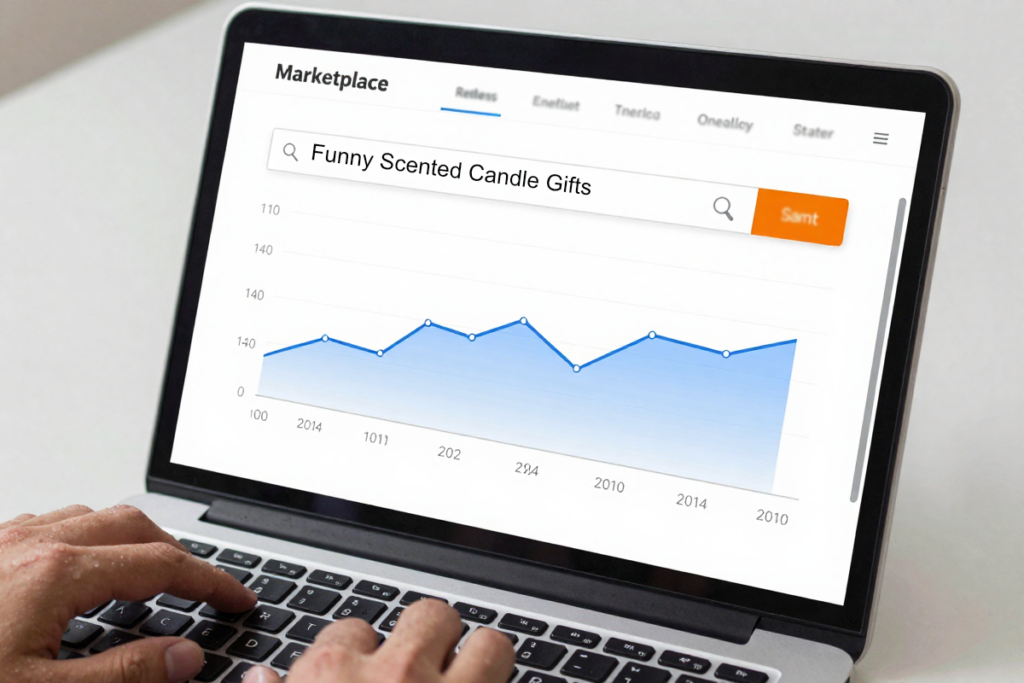
How do customers actually find your products? This comes down to the platform’s internal search engine.
Etsy SEO (Search Algorithm)
Etsy’s search algorithm favors relevance and customer experience.
- Keywords: You must optimize your titles and tags with phrases like “best platform for vintage items” or specific long-tail keywords like “handmade sterling silver ring.”
- Quality Score: Etsy looks at your click-through rate and conversion rate. If people click your item but don’t buy, your ranking drops.
- Niche Competition: While less saturated than eBay generally, popular niches like “personalized mugs” or “wedding decor” are fiercely competitive.
eBay Search Algorithm (Cassini)
eBay’s algorithm is driven by sales velocity and price.
- Reputation: Seller feedback is king. A seller with 99% positive feedback will rank higher than a new seller with the same item.
- Pricing: eBay often highlights the lowest-priced items (including shipping) at the top of search results.
- Auction Visibility: Ending an auction at a peak time (Sunday evening) can drive last-minute bidding wars, boosting visibility.
Profit Potential
Which platform puts more money in your pocket? The answer depends on your business model.
Etsy: High Margins, Lower Volume
Etsy is ideal for selling handmade items online where you control the supply.
- Margins: Because the audience expects to pay for quality, you can charge $40 for a candle that costs $5 to make.
- Repeat Business: Etsy allows you to build a brand. Customers will return to your specific shop for new collections.
eBay: Lower Margins, Higher Volume
eBay is a volume game.
- Flipping: The profit comes from buying low and selling high quickly. You might make $10 profit on an item, but sell 50 of them a week.
- Arbitrage: eBay is excellent for clearing inventory or selling items that have a defined market value (like a specific model of camera).
Example Scenarios:
- The Handmade Jewelry Seller: On Etsy, she sells a necklace for $60. On eBay, similar handmade items might struggle to sell above $35 due to price competition. Winner: Etsy.
- The Vintage Clothing Reseller: He finds a vintage Levi’s jacket. On Etsy, it might sit for weeks waiting for the right buyer. On eBay, he lists it as an auction, and it sells in 3 days for market value. Winner: eBay (for speed).
Shipping, Logistics & Fulfillment

Shipping can make or break a sale. Both platforms offer tools, but they function differently.
- Etsy: Offers integrated shipping labels. You can buy and print labels directly from the dashboard, and Etsy automatically marks the item as shipped and notifies the buyer. It is very streamlined for small parcels.
- eBay: Also offers integrated shipping (via PayPal or direct carrier integration). However, because eBay sellers often deal with heavier or irregular items (furniture, auto parts), the shipping calculations can be more complex.
👉If you plan to sell on both platforms, managing shipping separately is inefficient. Tools like Pirate Ship allow you to import orders from both Etsy and eBay into one dashboard to print labels in bulk while also getting you a discounted shipping rate.
Branding vs. Reselling
This is the philosophical difference between the two.
Etsy = Brand Building
Etsy is a niche marketplace that rewards identity. Your shop name, your packaging, and your “thank you” notes all contribute to a brand. You are selling you as much as the product. This leads to higher customer lifetime value (LTV).
eBay = Transactional Selling
eBay is largely anonymous. Buyers often don’t remember the seller’s name; they just remember they got a good deal on a “Sony Headphones.” It is harder to build a loyal following on eBay because the platform keeps the customer data closer to the vest.
Pros and Cons
To summarize the pros and cons of selling on Etsy vs eBay, here is a quick checklist.
Etsy Pros
- Built-in Niche Audience: People come here specifically to buy handmade/vintage.
- Higher Perceived Value: You can charge more for craftsmanship.
- Community: Strong support networks and teams for sellers.
- Ease of Use: Very beginner-friendly interface.
Etsy Cons
- Strict Policies: You cannot sell just anything. If you aren’t truly handmade, you risk getting banned.
- Rising Fees: Fees have increased over the years, squeezing margins.
- Copycats: Popular items are often copied by mass manufacturers.
eBay Pros
- Massive Global Reach: Access to buyers in almost every country.
- Flexible Formats: Auctions can drive up prices for rare items.
- No Product Restrictions: You can sell almost anything (within legal limits).
- Seller Protection: Strong policies against fraudulent chargebacks.
eBay Cons
- Price Wars: It is easy for buyers to sort by “Price + Shipping: Lowest,” forcing you to compete on price.
- Complex Fees: The fee structure can be confusing for new sellers.
- Less Brand Loyalty: Harder to build a standalone brand identity.
Best Platform Based on Seller Type
Still undecided? Use this decision framework based on what you are selling.
- Handmade Creators (Jewelry, Art, Decor):
- Verdict: Etsy. The audience is already there looking for you. The “handmade” tag carries weight here that it doesn’t on eBay.
- Vintage Curators (Clothing, Mid-Century Modern):
- Verdict: Split. High-end, aesthetic vintage does well on Etsy. Common vintage (band tees, glassware) often moves faster on eBay.
- Resellers/Flippers (Thrift store finds, Electronics):
- Verdict: eBay. The volume and auction format are better for moving diverse inventory quickly.
- Side Hustlers:
- Verdict: Both. Start with the platform that fits your inventory, then expand.
Can You Use Both Platforms? (Smart Strategy Section)
You don’t actually have to choose just one. Many successful sellers use a hybrid strategy.
- Cross-Listing: You can list the same vintage item on both platforms. Just be sure to delete the listing on one platform immediately after it sells on the other to avoid double-selling.
- Diversification: If Etsy changes its algorithm or fees (which they do), having an eBay store provides a safety net for your income.
👉 Manually listing on two sites is time-consuming. Cross-listing software like Vendoo allows you to list once and push the listing to Etsy, eBay, Poshmark, and Mercari simultaneously.
Real Seller Case Studies

Case Study 1: The Ceramicist (Etsy Success)
Sarah makes handmade pottery. She started on eBay but found buyers were haggling over $5 shipping costs. She moved to Etsy, optimized her photos to show the texture of the clay, and raised her prices by 20%. Her sales doubled because the Etsy audience valued the “artisan” aspect more.
Case Study 2: The Sneaker Head (eBay Success)
Mike flips limited edition sneakers. He tried Etsy, but his listings got flagged or ignored because sneakers aren’t “handmade.” He moved to eBay, utilized the “Authenticity Guarantee” program, and now sells $50,000 worth of sneakers a month using the auction format to drive hype.
Final Verdict: Etsy vs. eBay
So, which platform is better for handmade or vintage items?
- Choose Etsy if: You are a maker, you value brand building, your items are unique/custom, and you want to avoid price wars. It is the best online marketplace for handmade goods.
- Choose eBay if: You are a reseller, you have a high volume of diverse items, you are comfortable with auctions, or you are selling vintage items that are more “collectible” than “decorative.”
Ultimately, the best platform is the one where your specific customer is hanging out. For many, the answer is to start on Etsy to build a brand, and expand to eBay to clear inventory and reach a wider audience.
FAQs
1. Is Etsy cheaper than eBay?
Not necessarily. While eBay has insertion fees, Etsy charges a 6.5% transaction fee on the total sale (including shipping). For low-cost items, Etsy’s $0.20 listing fee can add up. For high-cost items, eBay’s final value fee cap (in some categories) might be cheaper.
2. Can you sell vintage on Etsy?
Yes, but the item must be at least 20 years old. Etsy is very strict about this definition. If you try to sell “retro” items from the 90s as vintage, your shop could be suspended.
3. Which platform has more traffic?
eBay has significantly more total traffic globally. However, Etsy has more relevant traffic for handmade goods. 10,000 visitors on eBay might yield fewer sales for a handmade item than 1,000 visitors on Etsy.
4. Can beginners succeed on eBay?
Absolutely. eBay is great for beginners who want to start with zero inventory by selling things they already own around the house. The learning curve is steeper, but the potential for quick cash is higher.
5. Where should I sell handmade jewelry — Etsy or eBay?
Etsy is generally superior for handmade jewelry. The platform allows for better storytelling, higher quality imagery, and attracts buyers willing to pay for materials like sterling silver and gemstones.
Ready to Start Selling?

The debate of Etsy vs. eBay doesn’t have to be a permanent choice. The most successful sellers are agile. They test one platform, analyze their profit margins, and expand when ready.
Whether you are looking to sell vintage clothing online or launch a line of handmade soap, the most important step is simply starting.
Next Steps:
- Pick your niche.
- Calculate your fees using the breakdown above.
- Grab your tools. Don’t forget to check out [INSERT AFFILIATE LINK: Recommended Shipping (PirateShip) /Accounting Tool (Quickbooks)] to keep your new business organized from day one.
Happy Selling!
Disclaimer: This article contains affiliate links. If you purchase an item through the link I will earn a small commission at no extra cost to you.