Is Running an Etsy Shop Worth It in 2026? (Honest Pros, Cons & Profit Potential)
September 26, 2026

You’ve probably seen the viral TikToks and YouTube income reports. Someone sitting at their kitchen table, laptop open, announcing they made $10,000 last month selling printables on Etsy. It looks effortless. It looks life-changing.
But is running an Etsy shop actually worth it in 2026 — or is it a dream that rarely matches reality?
That’s exactly what this guide is going to answer. Whether you’re a complete beginner curious about starting an Etsy shop, a side hustler looking for realistic Etsy income expectations, or a creative entrepreneur wondering if the platform still has room for new sellers — you’re in the right place.
We’re going to cover the honest pros and cons of running an Etsy shop, how much money you can realistically make, the best business models working right now, the hidden costs most people ignore, and how AI is completely reshaping the opportunity landscape in 2026.
No hype. No sugarcoating. Just an honest Etsy seller review of what it actually takes to build a profitable shop today.
What Is Etsy and How It Works in 2026
Etsy is a global online marketplace that specializes in handmade, vintage, and creative goods. Founded in 2005, the platform has grown into one of the most recognized e-commerce destinations in the world, with over 90 million active buyers and nearly 9 million sellers competing for their attention.
In 2026, Etsy supports four main types of products:
- Handmade goods – Original, creator-made physical products
- Digital products – Printables, templates, planners, SVG files, and digital downloads
- Print-on-demand (POD) – Custom designs applied to physical products through third-party fulfillment partners
- Vintage items – Goods that are 20 years or older
Etsy makes money by charging sellers a combination of fees: a $0.20 listing fee per item, a 6.5% transaction fee on each sale, payment processing fees (typically around 3% + $0.25), and advertising costs through Etsy Ads and Offsite Ads.
In recent years, Etsy has made several platform changes that directly impact sellers. Fee increases have squeezed profit margins. AI-generated products have flooded certain categories. And algorithm updates have made it harder for new shops to gain organic traction without paid promotion. Understanding these shifts is essential before you decide whether Etsy entrepreneurship is the right move for you.
The Current State of Etsy: 2026 Reality Check
Let’s address the elephant in the room: Is Etsy too saturated?
The honest answer is — it depends on your niche.
Some categories like generic “farmhouse decor” or basic quote prints are genuinely overcrowded. Thousands of listings compete for the same buyer search terms, making it nearly impossible for new shops to stand out without significant ad spend. If you’re searching for things nobody tells you about selling on Etsy, market saturation is usually at the top of the list.
However, niche-focused micro-stores are thriving in 2026. Sellers who drill down into specific audiences — think “minimalist planner templates for teachers” instead of just “planners” — are still finding untapped demand and building profitable shops from scratch.
The other major disruption worth noting is AI-generated products. Tools like Midjourney and Adobe Firefly have made it possible for anyone to generate polished designs in minutes, flooding print-on-demand categories with generic, mass-produced content. This has raised the bar for quality and differentiation. Buyers are getting smarter, and they can spot cookie-cutter AI art from a mile away.
That said, smart sellers are using AI strategically — to speed up workflows, improve Etsy SEO, and research trends — rather than letting it replace genuine creativity.
What’s actually selling in 2026?
- Personalized and custom products
- Niche digital templates and planners
- Seasonal and event-specific items
- Functional home and office printables
- Specialty print-on-demand (specific communities, hobbies, professions)
The opportunity is real. The hype, however, often isn’t.
Pros of Running an Etsy Shop

✅ Low Startup Cost
Compared to traditional businesses, the barrier to entry for starting an Etsy shop is remarkably low. You can open a shop for free, and listing fees are just $0.20 per item. For digital product sellers, there’s virtually zero overhead.
✅ Built-In Traffic and Marketplace Trust
One of Etsy’s biggest advantages is that buyers already trust the platform. You’re not starting from zero trying to build brand awareness — you’re plugging into a marketplace with tens of millions of active shoppers. This built-in traffic is something you’d have to invest heavily to replicate on your own website.
✅ Passive Income Potential
Digital products on Etsy are one of the most accessible paths to passive income online. Create a template, planner, or printable once, and it can sell hundreds of times with no additional work. Many sellers earn consistent Etsy shop income from products they made months or even years ago.
✅ Flexibility and Creative Freedom
Running an Etsy shop from home gives you control over your schedule, your product line, and your brand identity. For creatives, it’s one of the few business models that genuinely rewards originality.
✅ Scalability with AI and Automation
In 2026, sellers who embrace tools for Etsy shop automation — from bulk listing tools to AI-assisted design and keyword research — can scale their shops far faster than was possible even a few years ago.
Cons of Running an Etsy Shop

❌ High Competition in Popular Niches
The most searched categories are often the most saturated. Without a clear niche strategy, new sellers can spend months with little to no visibility.
❌ Etsy Fees Cutting Into Profit Margins
When you add up listing fees, transaction fees, payment processing fees, and optional ad spend, Etsy can take anywhere from 10% to 25% or more of your revenue. Understanding the hidden costs of running an Etsy shop before you launch is critical for accurate pricing.
❌ Algorithm Dependency
Your shop’s success is largely tied to Etsy’s search algorithm, and that algorithm changes. Sellers who have built entire businesses on Etsy have seen their traffic cut overnight after an update. Lack of control over your own platform is a real and ongoing risk.
❌ Time Investment
The time required to set up, optimize, photograph, list, market, and manage an Etsy shop is often severely underestimated — especially by beginners. Running an Etsy shop while working full time is absolutely doable, but it requires serious time management.
❌ Risk of Copycats and IP Violations
Successful products get copied. Without trademark or copyright protection, your best-selling designs can end up in a competitor’s shop within days.
How Much Money Can You Really Make on Etsy?
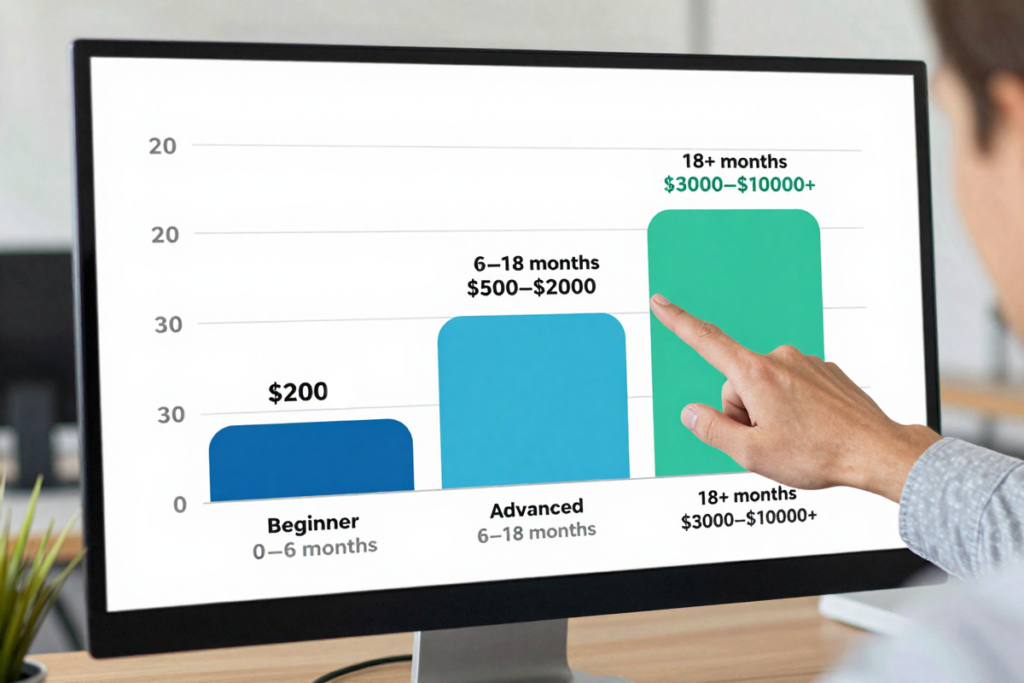
This is the question everyone wants answered, so let’s be direct about realistic Etsy income expectations.
Beginner Stage (0–6 months):
Most new sellers earn very little in their first few months — often under $200/month. This is normal. The Etsy algorithm takes time to index and trust new shops, and building reviews and sales history is a slow process.
Growth Stage (6–18 months):
With consistent effort, smart Etsy SEO, and a refined product lineup, many sellers reach $500–$2,000/month. This is where the side hustle becomes genuinely meaningful.
Advanced Sellers (18+ months):
Established shops with strong niche positioning, multiple product lines, and external traffic strategies can earn $3,000–$10,000+ per month. A small percentage of top sellers earn six figures annually, but this requires treating it like a real business.
Key factors that affect your Etsy shop income:
- Niche selection – Specificity wins
- Product quality and differentiation – Standing out in a saturated market
- Etsy SEO and listing optimization – How well your titles, tags, and descriptions match buyer search intent
- External marketing – Pinterest, Instagram, YouTube, and email lists drive significant traffic for top sellers
The income myths you’ll see on social media tend to highlight the best-case scenarios. The reality is that most sellers earn a modest side income — and that’s still worth it for many people.
Best Etsy Business Models in 2026
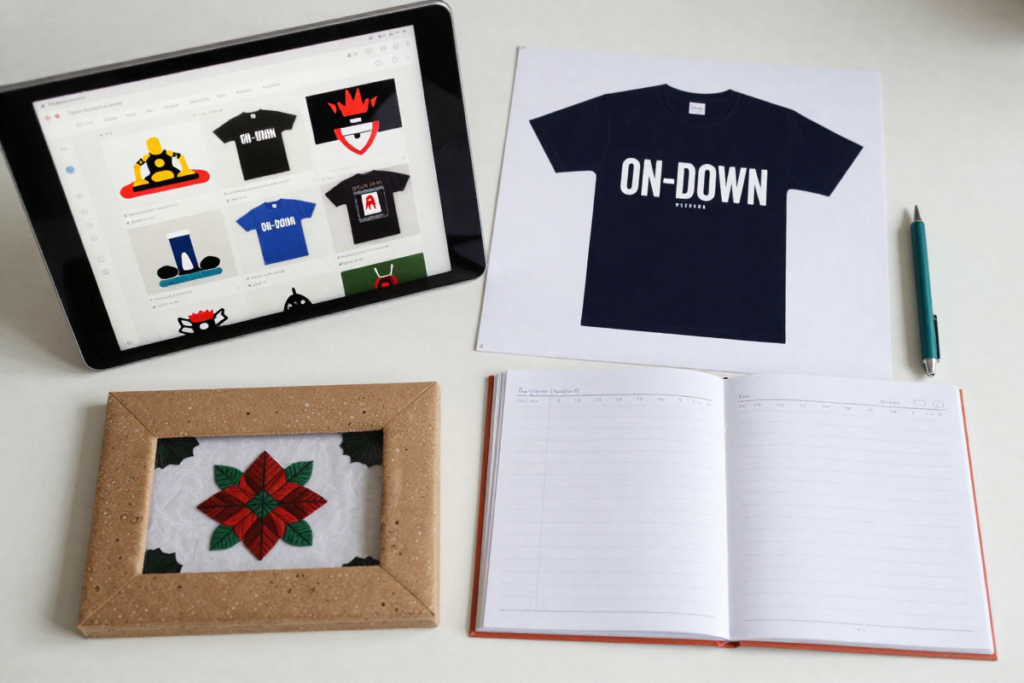
Not all Etsy shops are created equal. Here are the models generating the most consistent results right now:
1. Digital Products (Highest Passive Income Potential)
Printables, Canva Templates, planners, spreadsheets, and SVG files require upfront creation time but can generate income indefinitely. This is the most scalable model for solo creators.
2. Print-on-Demand
Services like Printful and Printify integrate with Etsy to handle production and shipping automatically. Low inventory risk, but profit margins are thinner and competition is fierce without a strong niche.
3. Handmade and Custom Products
Higher perceived value, stronger brand differentiation, and better customer loyalty — but limited scalability and higher time investment.
4. Niche-Focused Micro-Stores
Instead of selling everything to everyone, successful micro-stores target a very specific audience (e.g., “wall art for pediatric nurses” or “budget planners for college students”). This is how new sellers stand out on Etsy in a saturated market.
5. Subscription-Style Offerings
Some sellers create monthly digital bundles or pattern collections, building recurring customer relationships — a model that’s gaining traction in 2026.
The Real Costs of Starting an Etsy Shop
Here’s a transparent Etsy fee breakdown so you can plan accurately:
| Cost | Amount |
|---|---|
| Listing fee | $0.20 per item |
| Transaction fee | 6.5% of sale price |
| Payment processing | ~3% + $0.25 per transaction |
| Etsy Offsite Ads (if applicable) | 12–15% on referred sales |
| Optional Etsy Ads | Variable (you set budget) |
| Design tools | $13–$55/month |
| SEO research tools | $10–$30/month |
Don’t forget the time cost. If you value your time at $20/hour and spend 20 hours setting up your shop, that’s a $400 investment before you’ve made your first sale. Factor this into your real profit calculations.
💡 [START HERE: Etsy fee calculator and profit margin tool]
Step-by-Step: How to Start an Etsy Shop in 2026

Step 1: Choose a Profitable Niche
Avoid the trap of broad, overcrowded categories. Use AI tools and SEO research platforms to identify gaps in the market.
💡 [Super Helpful Niche research tool recommendation — eRank]
Ask yourself: Who is my specific buyer, and what problem does my product solve for them?
Step 2: Create Your First Product
For beginners, digital products are the lowest-risk starting point. Tools like Canva (free/paid) make professional design accessible even without a design background.
💡 [START CREATING: Canva Pro]
For print-on-demand, integrate with a POD service before launching your first listing.
Step 3: Optimize Your Listings
Etsy listing optimization is arguably the most important skill for Etsy shop success. Your titles and tags should reflect how buyers actually search — not how you’d describe your product.
- Use all 13 available tags
- Lead with your primary keyword in the title
- Write descriptions that answer buyer questions naturally
- Use high-quality product photography (this directly impacts your Etsy conversion rate)
💡 [TOOLS FOR SUCCESS: eRank or Marmalead for Etsy SEO research]
Step 4: Launch and Promote
Don’t rely solely on Etsy’s internal search. The sellers who grow fastest drive external traffic from Pinterest (especially powerful for visual products), Instagram, and content marketing.
How AI Is Changing Etsy in 2026

Artificial intelligence is creating both the biggest opportunity and the biggest threat for Etsy sellers simultaneously.
Opportunities:
- AI tools can generate product ideas, research trending keywords, and create listing descriptions in minutes
- Faster product iteration means you can test more ideas with less time investment
- AI-assisted design tools level the playing field for non-designers
Risks:
- AI-generated generic designs are flooding the marketplace, driving down perceived value
- Buyers are increasingly skeptical of mass-produced AI art
- Sellers who over-rely on AI without adding genuine creative value will struggle to differentiate
The competitive advantage in 2026 belongs to sellers who use AI intelligently — speeding up the process while maintaining authenticity and niche specificity.
Monetization Beyond Etsy: Building Multiple Income Streams
The most financially stable Etsy sellers don’t rely on the platform alone. Smart Etsy business tips for 2026 include building complementary income streams:
- Affiliate marketing — Recommend tools and resources you use (design software, SEO tools, print-on-demand services) and earn commissions
- Content marketing — A blog or YouTube channel that supports your shop drives free external traffic and creates additional monetization opportunities
- Pinterest traffic — Highly effective for digital and visual products, and works even for new accounts
- Email list building — Collecting buyer emails gives you an audience you own, independent of any platform
💡 [Email marketing tool recommendation — Kit or MailerLite]
Common Etsy Shop Mistakes to Avoid
These are the biggest Etsy shop mistakes new sellers make — and they’re almost entirely avoidable:
- Choosing the wrong niche — Picking a category because it looks popular rather than because it has room for new sellers
- Copying trending products without any differentiation or original angle
- Ignoring Etsy SEO — Listings without optimized titles, tags, and descriptions simply don’t get found
- Underpricing products — Failing to account for all costs leads to working for below minimum wage
- Quitting too early — Most shops that fail do so in the first 90 days, before the algorithm has had time to index them properly
Alternatives to Etsy (When It’s Not the Right Fit)

Etsy isn’t the only path to selling creative products online. Depending on your goals and situation, these alternatives may be worth considering:
- Shopify — Full control over your brand and customer data, but you’re responsible for all your own traffic
- Amazon Handmade — Massive built-in audience but strict seller requirements and steeper competition
- Gumroad or Payhip — Excellent for digital products with simpler fee structures
- Your own website — Maximum long-term control, but requires SEO and marketing investment upfront
💡 [TOP ETSY ALTERNATIVES: Shopify or Website Hosting & Builder ]
💡 [OTHER OPTIONS: Amazon Handmade, Gumroad, and Payhip ]
The decision often comes down to this: Etsy rents you an audience. Your own website builds one.
Final Verdict: Is Running an Etsy Shop Worth It in 2026?
Etsy is absolutely worth it for:
- Beginners who want low-cost entry into e-commerce
- Digital product creators looking for passive income potential
- Creatives with a specific niche and strong product differentiation
- Side hustlers willing to invest 6–12 months before expecting significant income
Etsy may not be worth it for:
- Sellers expecting fast money without significant effort
- Those unwilling to learn Etsy SEO and marketing basics
- Anyone building in a completely saturated niche without a unique angle
- Sellers who want full platform independence from day one
The honest truth is that Etsy shop success is very real — but it’s also very earned. The platform rewards patience, strategic niche selection, consistent listing optimization, and smart marketing. Those who treat it like a real business, not a passive income lottery ticket, are the ones writing the success stories.
Is it worth starting in 2026? Yes — but go in with your eyes open, your niche locked in, and your expectations grounded in reality.
Frequently Asked Questions
Is Etsy still profitable in 2026?
Yes, but profitability depends heavily on niche selection, pricing strategy, and SEO. Sellers with differentiated products in specific niches consistently earn meaningful income.
How long does it take to make money on Etsy?
Most sellers see their first consistent sales within 3–6 months. Building to a meaningful side income typically takes 6–18 months of consistent effort.
What sells best on Etsy right now?
In 2026, personalized items, niche digital templates, custom print-on-demand products, and functional planners and printables are among the top performers.
Do you need money to start an Etsy shop?
You can start for as little as $1 (the cost of your first five listings at $0.20 each). Practically speaking, budget $50–$200 for initial tools, design assets, and a small test advertising budget.
Can beginners succeed on Etsy today?
Yes — but success requires learning Etsy SEO, choosing the right niche, and committing to the process for at least 6–12 months. Beginners who treat it like a business from day one have a much higher success rate than those who treat it as a passive experiment.
Ready to take action? Download our free Etsy Shop Startup Checklist to make sure you launch with every advantage in your favor.
💡 [YOUR ETSY STARTUP CHECKLIST]
1. Open Your Shop: ETSY
2. Find Your Niche/Product Research: eRank
3. Create Digital Products: Canva Templates
4. Create Print-On-Demand Products: Printful, Printify
5. Calculate Your Profit: Profit Calculator
6. Email Marketing: Kit, MailerLite
7. Etsy Alternatives: Shopify, Website Host with Site Builder, Amazon Handmade, Gumroad, Payhip
Disclaimer: This article contains affiliate links. If you click on a link and choose to make a purchase, I will earn a commission at no extra cost to you.