How to Start an eCommerce Business with No Money (Step-by-Step Guide for Beginners)
September 24, 2026
You’ve probably heard it a hundred times: “You need money to make money.” And while that advice might hold true in some corners of the business world, it’s largely a myth when it comes to eCommerce — especially today.
The reality? Thousands of people have launched profitable online stores starting with zero dollars, zero inventory, and zero prior experience. They traded capital for creativity, and startup costs for sweat equity. The result was real income, built from scratch, often from a bedroom or kitchen table.
In this step-by-step guide, you’ll learn exactly how to start an eCommerce business with no money — from choosing the right niche and business model to building your store for free and driving traffic without spending a dime on ads. Whether you’re a complete beginner, a side hustler working full time, or someone who simply can’t afford to take financial risks right now, this guide was written for you.
Let’s get into it.
Is It Really Possible to Start an eCommerce Business with No Money?
Short answer: Yes — but let’s be honest about what that means.
Starting an online business with no money doesn’t mean it’s easy or instant. It means you’re substituting capital with time, effort, and strategy. The learning curve is real, and results won’t come overnight. But the barrier to entry has never been lower, and the tools available for free today are genuinely powerful.
Here’s what a zero-budget eCommerce launch actually looks like in practice:
- No inventory costs — you sell products you never physically touch
- No website hosting fees — free platforms and trials handle that
- No paid advertising — organic social media and SEO replace ad spend
- No upfront product costs — your supplier ships directly to your customer
The four business models that make this possible are:
| Business Model | How It Works | Startup Cost |
|---|---|---|
| Dropshipping | Sell products; supplier ships for you | $0 |
| Print-on-Demand | Sell custom designs on products | $0 |
| Digital Products | Sell ebooks, templates, or courses | $0 |
| Affiliate eCommerce | Promote others’ products for commission | $0 |
Each of these models lets you begin selling online without upfront investment. The trade-off is time — building organic traffic and brand recognition takes longer than running paid ads. But once it works, it compounds beautifully.
Step 1 – Choose a Profitable Niche (Without Paying for Research Tools)
One of the biggest mistakes beginners make is picking a niche they love without checking whether people actually buy in that space. The good news is you can validate demand completely for free.
How to Find Trending Products for Free
You don’t need a $99/month keyword tool to find what’s selling. These free resources are surprisingly powerful:
- TikTok Search Bar — Type a product category and watch what autocompletes. Look at videos with high views and low follower counts. That gap is your opportunity.
- Amazon Best Sellers — Browse amazon.com/best-sellers by category. Focus on subcategories to avoid oversaturated markets.
- Google Trends — Compare search interest over time and by region. A rising trend is far more valuable than a peaked one.
- Reddit & Niche Forums — Subreddits like r/Entrepreneur, r/frugal, or hobby-specific communities reveal real pain points. When people ask “Is there a product that does X?” — that’s a product opportunity.
What Makes a Niche Profitable
Not every niche with demand is worth entering. A profitable niche hits three marks:
- Consistent demand — people search for it regularly, not just seasonally
- Low-to-medium competition — you can realistically rank and get noticed
- Reasonable profit margins — especially important in dropshipping and print-on-demand
Aim for the intersection of what people are actively buying and what you can speak to authentically. Pure passion with no market = a hobby. Pure profit with no connection = burnout. The sweet spot is both.
Niches worth exploring for beginners: pet accessories, home organization, fitness for specific demographics, eco-friendly products, and digital tools for remote workers.
Step 2 – Pick a Business Model That Requires $0 Upfront
Once you have a niche, your next decision is how you’ll sell. Here’s a deeper look at each zero-investment model.
Dropshipping (Most Beginner-Friendly)
Dropshipping lets you sell products online without ever buying or storing inventory. When a customer places an order, your supplier ships it directly to them. You keep the margin between what the customer paid and what the supplier charges.
Pros:
- No inventory or warehouse costs
- Wide product selection
- Easy to test multiple niches quickly
Cons:
- Lower profit margins than buying wholesale
- Less control over shipping times and quality
- Competitive in popular niches
🔗 [ Shopify Free Trial ]
Start your free trial with Shopify and launch your dropshipping store today — no credit card required.
Print-on-Demand
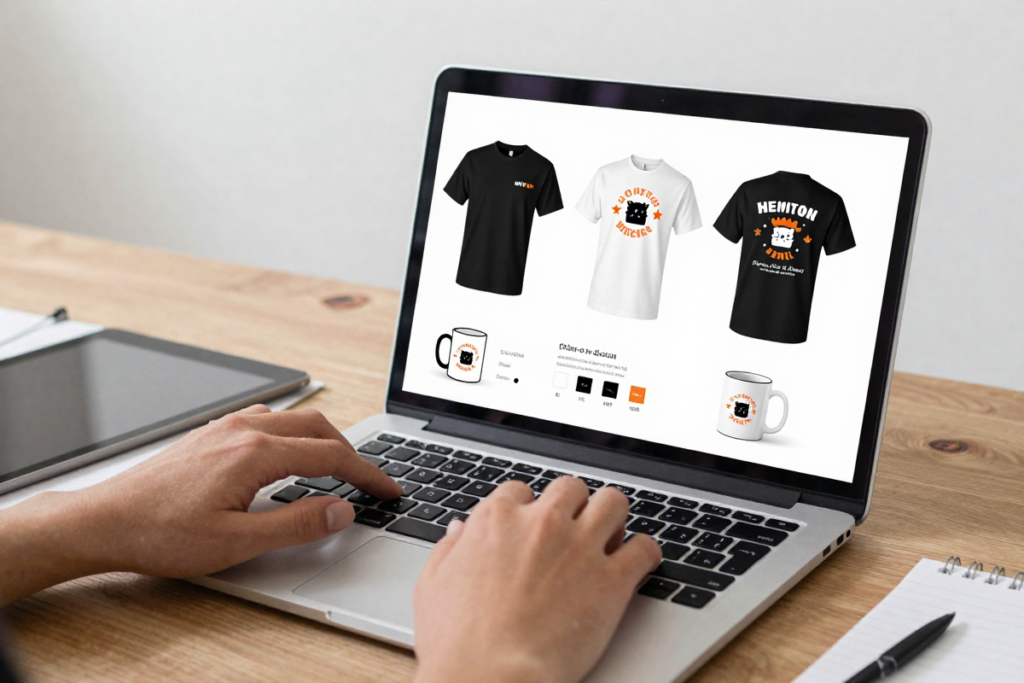
Print-on-demand (POD) is ideal if you have even a basic sense of design. You create artwork, upload it to a POD platform, and they print it on t-shirts, mugs, phone cases, and more — only when someone orders. No bulk orders, no wasted inventory.
Platforms like Printful integrate directly with your store and handle production and shipping automatically.
🔗 [START HERE — Printful Free Sign-Up]
Try Printful for free and launch your first product today — zero upfront cost.
Digital Products
Selling digital products — ebooks, Notion templates, Canva graphics, online courses, or spreadsheets — offers the highest margins of any model. You create it once and sell it infinitely. There’s no shipping, no inventory, and no supplier to coordinate with.
This model works especially well if you have expertise in a specific area. A productivity template that took you two hours to create can sell for $15–$47 indefinitely.
Affiliate eCommerce Hybrid
An affiliate eCommerce model means you build a store or content site around product recommendations, earning a commission on every sale made through your links. You don’t handle orders, returns, or inventory — you simply connect buyers with sellers.
This is one of the lowest-risk ways to enter eCommerce and pairs perfectly with content creation and SEO blogging.
Step 3 – Build Your Online Store for Free
You don’t need to spend money on a website to start selling online — at least not yet.
Best Free eCommerce Platforms
- Shopify — Offers a free trial period that gives you enough time to set up your store, add products, and even make your first sale before committing to a paid plan. It’s the most beginner-friendly option with the best app ecosystem.
🔗 [GET STARTED TODAY — Shopify Free Trial]
- WooCommerce — A free plugin for WordPress. If you already have a WordPress site or a free WordPress.com account, WooCommerce is a powerful zero-cost option. The learning curve is slightly steeper, but the flexibility is unmatched.
- Big Cartel — Offers a permanently free plan for up to five products. Perfect for artists, creators, and makers testing the waters.
How to Launch Without Paying for a Domain
In the beginning, using a subdomain (like yourstore.myshopify.com or yourstore.big.cartel.com) is completely fine. Customers may not even notice, and it costs nothing. Once your store generates revenue, reinvest a small portion into a custom domain — typically $10–$15 per year.
Don’t let the absence of a custom domain stop you from launching. Done is better than perfect.
Step 4 – Find Products Without Buying Inventory
If you’ve chosen dropshipping or print-on-demand, sourcing products is the fun part — and it’s free.
Where to Source Products for Free
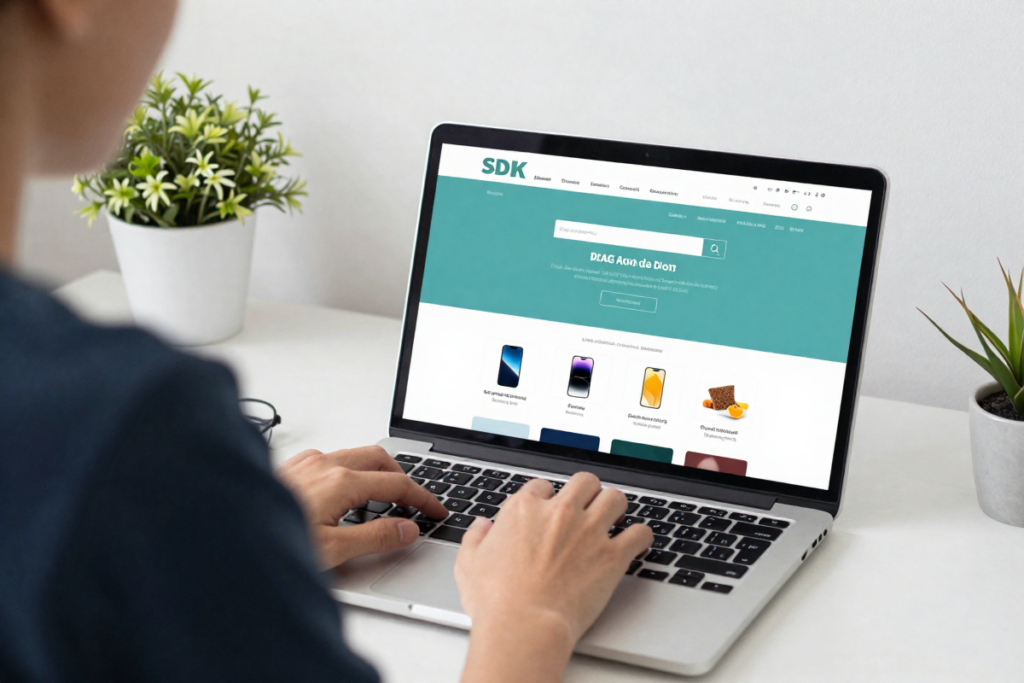
- AliExpress — The largest free marketplace for dropshipping products. Browse millions of items, check supplier ratings, and import products to your store using free tools.
- CJdropshipping — A strong AliExpress alternative with faster shipping options and a free-to-use platform. Great for finding winning products with better margins.
Both platforms let you list products in your store without purchasing them upfront. You only pay the supplier after a customer pays you.
How to Validate Products Before Selling
Never list a product without doing basic due diligence:
- Read reviews — Look for consistent quality feedback and verified buyer reviews on AliExpress or Amazon
- Check your competitors — Search the product on TikTok Shop, Etsy, or Google Shopping. Is anyone selling it successfully? That’s a green light, not a red one.
- Test demand with content — Post an organic TikTok or Instagram Reel showcasing the product before building a full store. Gauge response first.
Step 5 – Create Product Listings That Convert
A great product with a bad listing will not sell. Here’s how to write listings that turn visitors into buyers.
Writing High-Converting Product Descriptions
The golden rule: sell the outcome, not the object.
Instead of: “Stainless steel water bottle, 32oz, BPA-free”
Write: “Stay hydrated all day without a single refill — our 32oz insulated bottle keeps drinks cold for 24 hours, hot for 12, and fits in every car cupholder.”
Focus on:
- The specific problem it solves
- The emotion behind the purchase
- Social proof language (“customers love this for…”)
- Clear, scannable bullet points
Product Images (Free Methods)
Strong visuals are non-negotiable. Here’s how to get them for free:
- Use supplier images — AliExpress and CJdropshipping usually provide high-quality product photos you can use
- Edit with Canva — Upload supplier images and add branded overlays, lifestyle backgrounds, or text callouts using Canva’s free plan
🔗 [START DESIGNING HERE Canva Pro Upgrade]
Step 6 – Get Traffic Without Spending Money
Traffic is the lifeblood of any eCommerce store. Without paid ads, your job is to create content that brings people to you organically. Here are the most effective free channels:
TikTok Organic Strategy
TikTok’s algorithm is uniquely generous to new accounts. A video from a brand-new profile with zero followers can go viral if it resonates. This makes it the single best free traffic source for eCommerce beginners right now.
What works:
- Unboxing and “wow factor” product videos
- Before/after demonstrations
- Problem-solution storytelling
- Trending audio with product showcases
Post consistently — at least 3–5 times per week — and engage with comments. Your first viral video could generate hundreds of store visits overnight.
SEO & Blogging
Search engine optimization (SEO) is a long-term play, but it’s one of the most valuable free traffic strategies available. By writing blog content that targets long-tail keywords — like “best gifts for dog owners under $30” or “how to organize a small closet” — you attract shoppers who are already in buying mode.
It takes 3–6 months to see meaningful SEO results, but the traffic compounds over time and costs nothing to maintain.
Pinterest Marketing
Pinterest functions more like a search engine than a social platform, and its users have high purchase intent. Create vertical pins using Canva, link them to your product pages or blog posts, and pin consistently. A single popular pin can drive traffic for months or years.
Instagram Reels Strategy
Repurpose your TikTok content directly to Instagram Reels. Remove the TikTok watermark first (tools like SnapTik do this for free), then post with relevant hashtags. This lets you reach two audiences with the work of one.
Step 7 – Automate & Scale with Free Tools
Once you start generating orders, you’ll want to work smarter, not harder. These free tools help you do exactly that:
- Mailchimp (Free Plan) — Build an email list from day one. Even a simple welcome email sequence can recover abandoned carts and increase repeat purchases. Mailchimp’s free plan supports up to 500 contacts.
- Canva — Create social media content, email graphics, and product images without a designer
- Google Analytics — Free traffic and behavior tracking for your store
- Meta Business Suite — Free scheduling and analytics for Facebook and Instagram
When to reinvest: Once you hit your first $200–$500 in profit, consider upgrading your Shopify plan, purchasing a custom domain, or running a small test ad campaign. Let the business fund its own growth.
Common Mistakes to Avoid
Even with the right strategy, beginners make avoidable errors. Watch out for these:
- Choosing the wrong niche — Passion alone isn’t enough. Validate demand with data before building anything.
- Expecting instant results — Organic traffic and brand trust take time. Commit to at least 90 days before evaluating.
- Ignoring branding — A consistent name, color palette, and voice separates memorable stores from forgettable ones. Use Canva to build a simple brand kit for free.
- Overcomplicating the setup — Too many beginners spend weeks perfecting their store design instead of publishing and promoting. Launch ugly. Improve later.
Realistic Timeline: How Long Until You Make Money?
Here’s an honest, week-by-week expectation for a zero-budget eCommerce launch:
| Timeframe | What to Expect |
|---|---|
| Week 1–2 | Store live, first products listed, first social content posted |
| Week 3–4 | Growing followers, early organic traffic, possibly first sale |
| Month 2 | Consistent content rhythm, SEO indexing, small but growing sales |
| Month 3 | First consistent weekly sales, beginning to understand what converts |
| Month 4–6 | Reinvesting profits, refining top products, meaningful monthly revenue |
Your first sale can come within days if you post a viral video. Your first consistent income typically takes 60–90 days of focused effort. A full-time income from a zero-budget start is realistic within 6–18 months — but only if you stay consistent and keep learning.
FAQs About Starting an eCommerce Business with No Money

Do I need an LLC to start selling online?
No — you can start as a sole proprietor with zero paperwork. As your income grows, forming an LLC offers liability protection and tax benefits, but it’s not required on day one.
Can I do this part-time while working full time?
Absolutely. Most successful eCommerce entrepreneurs started their stores on evenings and weekends. The key is consistency over intensity — 30 focused minutes daily beats sporadic five-hour sessions.
Is dropshipping dead?
No, but it has matured. Generic dropshipping with no branding is increasingly difficult. Niche-specific stores with strong content marketing and brand identity are thriving. Focus on building a brand, not just a product catalog.
How do I handle returns with no money upfront?
Most dropshipping suppliers have return policies. For defective products, suppliers often replace them at no cost. Set clear return policies upfront in your store, and communicate promptly with customers. Most return issues can be resolved without you spending money.
Can I start an eCommerce business without knowing how to code?
Completely. Shopify, Big Cartel, and WooCommerce are all built for non-technical users. If you can use a smartphone, you can build a store.
Final Thoughts: Start Now, Not Perfect
Here’s the truth that most people overlook: the biggest cost of starting an eCommerce business with no money isn’t financial — it’s the cost of waiting.
Every week you spend researching instead of launching is a week someone else in your niche is gaining ground. Every day you wait for the “perfect” store design is a day you could have been learning what actually works.
You have everything you need to start today. A free platform, free tools, free traffic channels, and a guide that lays out every step. The only thing left is the decision to begin.
Pick a niche. Choose a model. Launch your store. Post your first piece of content. Then do it again tomorrow.
The eCommerce entrepreneurs who make it aren’t the ones who started with the most money — they’re the ones who started.
🔗 [OPEN YOUR SHOP HERE — Shopify Free Trial]
Ready to launch your store? Start your free trial with Shopify — no credit card required, no inventory needed. Your first sale could be closer than you think.
🔗 [START PRINT-ON-DEMAND HERE — Printful Free Sign-Up ]
Want to sell custom products? Try Printful for free and launch your first print-on-demand product today.