Fulfillment by Amazon (FBA) vs. Self-Fulfillment: Which Is Right for You?
August 29, 2026
Introduction
The single biggest decision that can make or break your ecommerce margins isn’t what you sell—it’s how you ship it.
In the world of Amazon selling, fulfillment strategy determines everything: your profitability, your time commitment, your scalability, and ultimately whether your business thrives or barely survives. Yet thousands of sellers make this critical choice based on guesswork rather than data.
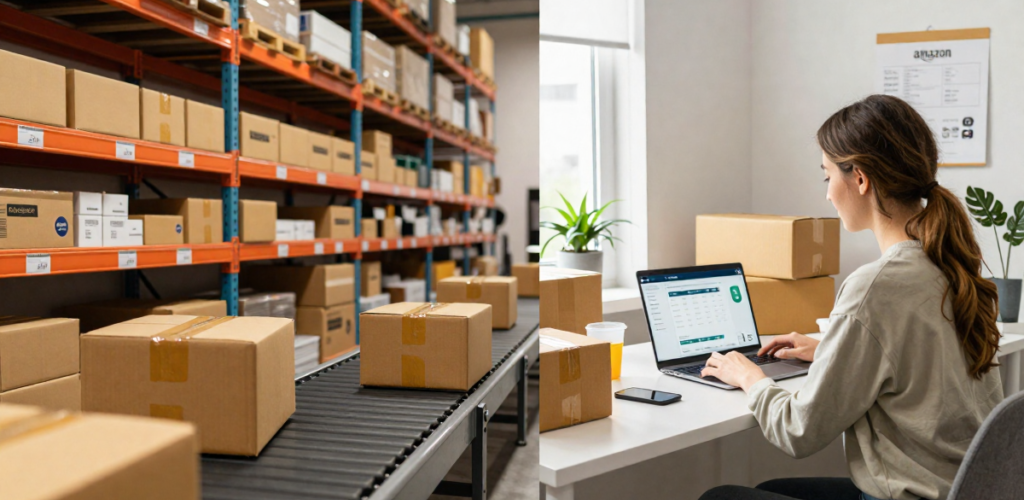
Fulfillment in ecommerce refers to the complete process of storing inventory, packing orders, shipping products to customers, and handling returns. On Amazon’s platform, sellers face two primary fulfillment methods:
- Fulfillment by Amazon (FBA): Amazon stores your products in their warehouses and handles all logistics, customer service, and returns on your behalf
- Self-Fulfillment (FBM – Fulfilled by Merchant): You maintain complete control by storing, packing, and shipping products yourself
This choice matters far more than most new sellers realize. The wrong fulfillment strategy can destroy profit margins on otherwise successful products, while the right approach can multiply your revenue through increased visibility and customer trust.
In this comprehensive guide, you’ll discover exactly which fulfillment method aligns with your business goals, budget, and growth plans—complete with real-world cost comparisons, profit margin analysis, and a clear decision framework to eliminate the guesswork.
What Is Fulfillment by Amazon (FBA)?
Fulfillment by Amazon (FBA) is Amazon’s complete logistics service where the ecommerce giant handles virtually every aspect of order fulfillment on behalf of sellers. When you choose Amazon FBA, you’re essentially outsourcing your entire fulfillment operation to one of the world’s most sophisticated logistics networks.
How the FBA Process Works
The Amazon FBA program follows a straightforward three-step process:
1. Send inventory to Amazon warehouses
You prepare and ship your products to designated Amazon fulfillment centers according to specific packaging requirements and labeling standards. Amazon’s system automatically determines which warehouse(s) will receive your inventory based on their distribution strategy.
2. Amazon stores, packs, and ships products
Once your inventory arrives and is checked in, Amazon stores your products in their climate-controlled warehouses. When customers place orders, Amazon’s automated systems pick, pack, and ship your products using their optimized logistics network—often achieving same-day or next-day delivery.
3. Amazon handles customer service and returns
Amazon’s customer service team manages all buyer inquiries, processes returns, and handles refunds according to Amazon’s policies. This includes their industry-leading A-to-Z Guarantee that protects customers and builds trust in the platform.
Key Features of Amazon FBA
Prime Eligibility
Products fulfilled through FBA automatically qualify for Amazon Prime’s free two-day shipping (and increasingly, same-day delivery). This Prime badge dramatically increases conversion rates since over 200 million Prime members actively seek Prime-eligible products.
Automated Logistics
Amazon’s fulfillment infrastructure handles the complex logistics that would otherwise require significant time, technology, and operational expertise—from inventory management systems to shipping carrier relationships.
Amazon Customer Trust
The “Fulfilled by Amazon” designation signals reliability and fast shipping to customers, leveraging Amazon’s reputation to increase buyer confidence in your products.
Pros of FBA
Access to Prime customers (conversion boost)
Studies consistently show that Prime-eligible products convert at significantly higher rates than non-Prime listings. The Prime badge serves as a powerful trust signal that reduces purchase hesitation and increases average order values.
Hands-off fulfillment
FBA frees you from the daily operational tasks of order fulfillment, allowing you to focus on product sourcing, marketing, and business growth rather than packing boxes and printing shipping labels.
Scalable for growth
Amazon’s fulfillment network can handle sudden sales spikes—whether from successful marketing campaigns or seasonal demand—without requiring you to hire additional staff or expand warehouse capacity.
Better Buy Box advantage
Amazon’s Buy Box algorithm favors FBA sellers, meaning you’re more likely to win the coveted “Add to Cart” button that captures the majority of sales on any given product listing.
Cons of FBA
Storage and fulfillment fees
Amazon charges fees for both storing your inventory (calculated per cubic foot per month) and fulfilling each order. These FBA fees can significantly impact profit margins, especially for slow-moving or oversized items.
Less control over branding and packaging
Amazon uses standardized packaging with their branding, limiting your ability to create memorable unboxing experiences or include branded inserts that build customer loyalty and encourage repeat purchases.
Inventory restrictions and long-term storage fees
Amazon imposes storage limits based on your sales history and Inventory Performance Index (IPI) score. Products that remain in Amazon warehouses for over 365 days incur substantial long-term storage fees that can quickly erode profitability.
👉 [INVENTORY MANAGEMENT software for FBA sellers]
👉 [AMAZON FBA CALCULATOR and analytics tool (FREE)]
👉 [FREIGHT FORWARDING SERVICE for international FBA shipments]
What Is Self-Fulfillment (FBM)?
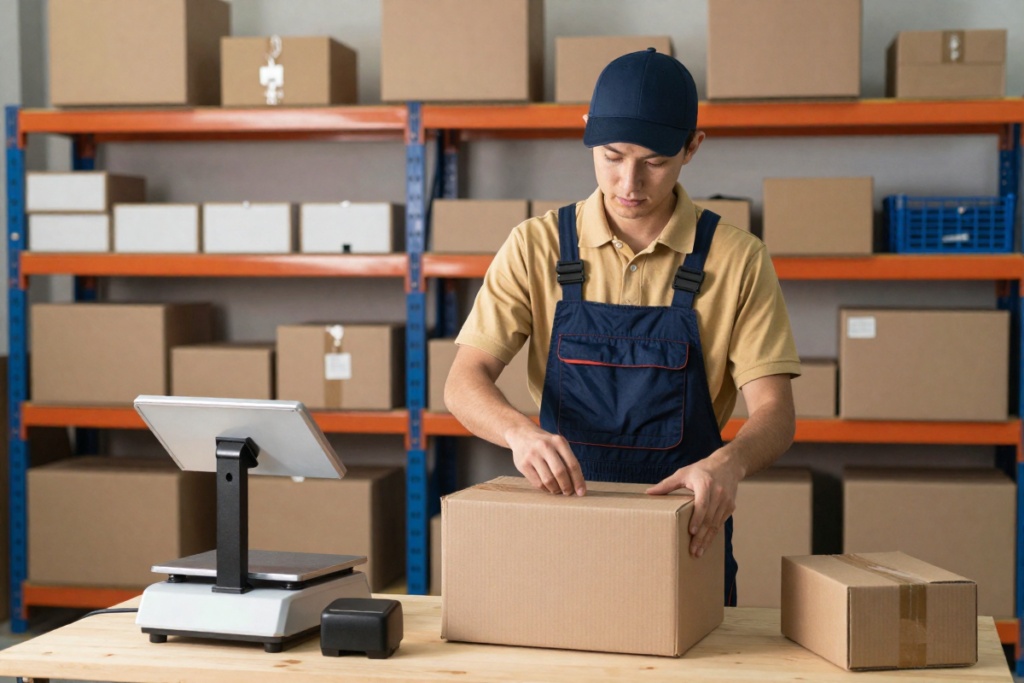
Self-fulfillment, officially called Fulfilled by Merchant (FBM) on Amazon, is the traditional ecommerce model where you—the seller—maintain complete control over the entire order fulfillment process. When you self-fulfill Amazon orders, you’re handling everything in-house or through your chosen third-party logistics provider.
How Self-Fulfillment Works
With merchant-fulfilled Amazon orders, the seller manages four key responsibilities:
Storage
You store inventory in your own location—whether that’s a spare bedroom, garage, rented warehouse space, or a third-party logistics (3PL) facility you’ve contracted independently.
Packing
When orders arrive, you’re responsible for picking the correct items, packing them securely with appropriate materials, and preparing packages for shipment.
Shipping
You select shipping carriers, print labels, arrange pickups or drop-offs, and ensure packages reach customers within the delivery timeframes you’ve promised on your listings.
Customer Service
You handle all customer inquiries, process returns, issue refunds, and manage any disputes or issues that arise post-purchase.
Pros of Self-Fulfillment
Full control over brand and customer experience
Self-shipping Amazon orders allows you to create customized packaging with your branding, include promotional inserts, handwritten thank-you notes, or product samples—all tactics that build customer loyalty and encourage repeat purchases outside of Amazon’s ecosystem.
Lower fees (no Amazon storage fees)
You avoid Amazon’s storage fees and fulfillment fees, keeping more revenue for yourself. This advantage becomes particularly significant for products with low turnover or large physical dimensions.
Better for custom, handmade, or fragile products
Products requiring special handling, customization, or careful packaging often perform better with self-fulfillment, where you can ensure each item receives appropriate attention.
Flexibility with multi-channel selling
When you control your own inventory, you can simultaneously sell on Amazon, your Shopify store, eBay, Etsy, and other platforms without coordinating complex multi-channel fulfillment (MCF) arrangements.
Cons of Self-Fulfillment
Time-intensive
Fulfilling orders yourself requires significant daily time commitment—from processing orders and packing boxes to making carrier runs and responding to customer messages.
Requires logistics setup
You need to establish relationships with shipping carriers, source packaging materials, implement inventory management systems, and develop efficient packing workflows.
Slower shipping (no Prime advantage)
Without access to the Prime badge, your listings compete at a disadvantage against FBA sellers. While Amazon’s Seller Fulfilled Prime (SFP) program offers an alternative, it requires meeting strict performance metrics.
Harder to scale
As order volume grows, self-fulfillment quickly becomes a bottleneck. Scaling requires hiring staff, expanding storage space, and implementing more sophisticated inventory management—all significant operational challenges.
👉 [TOP RECOMMENDED SHIPPING SOFTWARE: Discounted Shipping & label]
👉 [BULK SHIPPING SUPPLIES: for ecommerce sellers]
👉 [THIRD-PARTY LOGISTICS (3PL): provider comparison]
👉 [WAREHOUSE MANAGEMENT SYSTEMS: for small businesses]
Cost Comparison: FBA vs. Self-Fulfillment
Understanding the true cost of each fulfillment method requires looking beyond the obvious fees to capture the complete financial picture—including hidden costs that often catch new sellers by surprise.
Breakdown of FBA Costs
Fulfillment fees
Amazon charges a per-unit fulfillment fee based on product size and weight. As of 2024, these range from approximately $3.22 for small standard-size items to $9+ for large or oversized products. These fees cover picking, packing, shipping, customer service, and returns processing.
Storage fees
Monthly inventory storage fees are calculated per cubic foot. Standard-size items typically cost $0.87 per cubic foot from January-September and $2.40 per cubic foot during the October-December peak season. Oversized items have different fee structures.
Long-term storage penalties
Inventory stored for 271-365 days incurs a long-term storage fee of $6.90 per cubic foot or $0.15 per unit (whichever is greater). After 365 days, Amazon charges an “aged inventory surcharge” that can devastate margins on slow-moving products.
Additional FBA costs to consider:
- Removal or disposal fees for unsold inventory
- Labeling services if you don’t prep products yourself
- Inventory placement fees if you want to avoid splitting shipments
- Unplanned service fees for non-compliant packaging or labeling
Breakdown of FBM Costs
Shipping rates
Carrier shipping costs vary dramatically based on package dimensions, weight, destination, and your carrier agreement. Most small sellers pay retail rates initially, though commercial discounts become available as volume increases.
Packaging materials
Boxes, poly mailers, bubble wrap, tape, labels, and protective padding add up quickly. Material costs typically range from $0.50 to $3.00 per order depending on product size and protection requirements.
Labor/time cost
Whether you’re fulfilling orders yourself or paying employees, there’s a real cost to the time spent picking, packing, and shipping. Even at minimum wage, labor costs often exceed $2-4 per order when you account for the complete workflow.
Additional FBM costs to consider:
- Warehouse or storage space rental
- Inventory management software subscriptions
- Shipping scale and label printer
- Insurance for valuable inventory
- Returns processing and restocking labor
Real-World Example Comparison
Example 1: Small Standard-Size Product
Product: Phone case (4 oz, 6″ x 4″ x 0.5″)
FBA Costs per Unit:
- Fulfillment fee: $3.22
- Storage fee (monthly average): $0.15
- Total FBA cost per sale: $3.37
FBM Costs per Unit:
- Shipping (First Class): $4.50
- Packaging materials: $0.75
- Labor (5 minutes at $15/hr): $1.25
- Total FBM cost per sale: $6.50
Winner: FBA saves $3.13 per unit
Example 2: Large/Heavy Product
Product: Yoga mat set (5 lbs, 24″ x 8″ x 8″)
FBA Costs per Unit:
- Fulfillment fee: $9.73
- Storage fee (monthly average): $1.20
- Total FBA cost per sale: $10.93
FBM Costs per Unit:
- Shipping (Ground): $8.50
- Packaging materials: $1.50
- Labor (8 minutes at $15/hr): $2.00
- Total FBM cost per sale: $12.00
Winner: FBA saves $1.07 per unit (though margin is closer for larger items)
👉 AMAZON FBA CALCULATOR TOOL: Free To Use
👉 SHIPPING RATE COMPARISON TOOL
Profit Margin Analysis
While cost comparison shows which method costs less, profit margin analysis reveals which actually makes you more money—a critical distinction that changes the calculation entirely.
How Each Model Impacts Margins
FBA’s impact on profit margins:
The Prime badge and improved Buy Box eligibility typically increase conversion rates by 30-70% compared to FBM listings. This higher sales velocity often compensates for higher per-unit costs through increased volume and pricing power (Prime customers generally accept slightly higher prices for faster, free shipping).
FBM’s impact on profit margins:
Lower per-unit fulfillment costs directly improve margins on each sale, but lower conversion rates and reduced visibility often result in fewer total sales. For high-margin products or niche markets with less price competition, this trade-off can work in your favor.
Hidden Costs to Consider
Returns
FBA includes returns processing in the fulfillment fee, though you still pay the cost of unsellable returned inventory. With FBM, you bear the full cost of return shipping labels, processing time, and potential inventory loss from damaged returns.
Damaged inventory
Amazon reimburses for inventory damaged in FBA warehouses, though the reimbursement process can be bureaucratic. With FBM, you absorb 100% of the loss from damaged inventory in your storage.
Storage inefficiencies
FBA’s storage fees incentivize fast inventory turnover, which can actually improve cash flow discipline. With FBM, it’s easy to accumulate slow-moving inventory without the financial pressure to liquidate it, tying up working capital.
When FBA Is More Profitable
FBA typically delivers better overall profitability when:
- Your product competes in categories where Prime eligibility significantly impacts conversion
- You’re selling small, lightweight items with favorable FBA fee structures
- High sales velocity minimizes storage duration and associated fees
- Your time is better spent on product sourcing or marketing than fulfillment
- You’re targeting growth and need Amazon’s infrastructure to scale
- Buy Box competitiveness is critical in your category
When FBM Is More Profitable
Self-fulfillment usually wins on profitability when:
- You’re selling oversized, heavy, or low-priced items where FBA fees consume margins
- Your products have slow but steady turnover (avoiding long-term storage fees)
- You’re maintaining brand control and building a multi-channel business
- You have existing warehouse space or fulfillment infrastructure
- Your products require custom packaging or handling
- You’re selling handmade, made-to-order, or customizable items
Scalability & Growth Potential
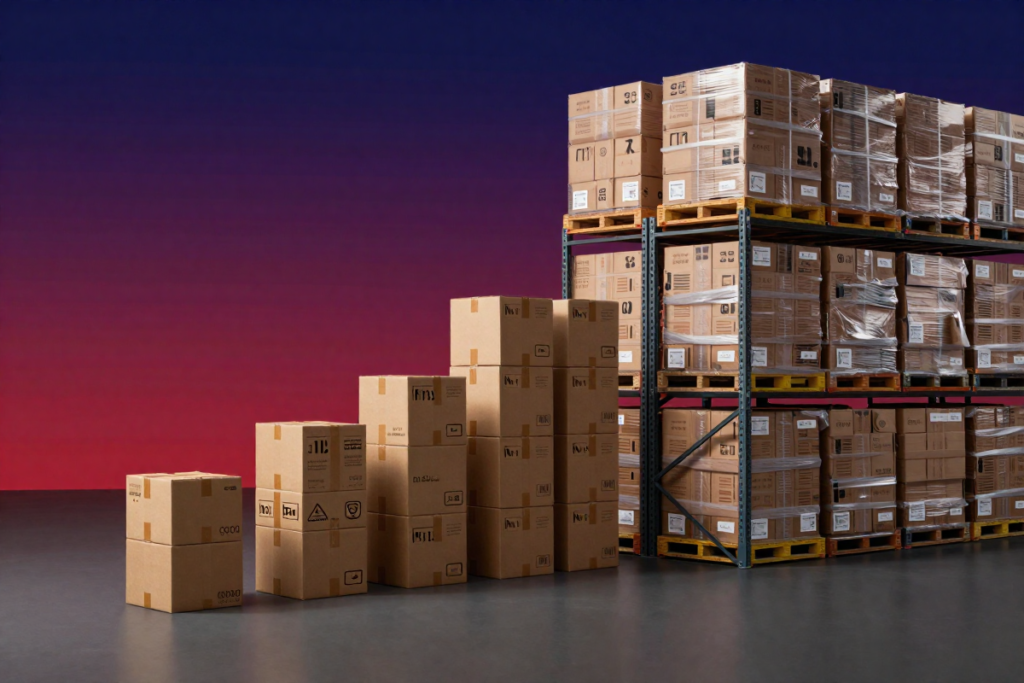
Your fulfillment strategy doesn’t just affect today’s profitability—it fundamentally shapes your business’s growth trajectory and ceiling.
FBA Scalability
Easier scaling
Amazon’s fulfillment network can handle dramatic growth without requiring you to hire staff, expand warehouses, or negotiate better shipping rates. Sellers can scale from 10 orders per month to 10,000 without fundamentally changing their operational model.
Automation benefits
Once your products are in FBA warehouses, fulfillment happens automatically. This passive approach allows you to manage a larger catalog, test more products, and expand into new categories without proportional increases in time commitment.
Limitations on scalability:
- Amazon’s inventory limits can restrict growth during peak seasons
- Storage fees increase during Q4 when you most need expanded capacity
- Category restrictions may limit which products you can send to FBA
- Restock speed depends on Amazon’s receiving capacity
FBM Scalability
Limited by logistics capacity
Self-fulfillment growth requires proportional increases in fulfillment resources. Doubling sales means doubling labor, storage space, and operational complexity—a linear relationship that creates natural growth bottlenecks.
Transitioning from home to warehouse
Most FBM sellers hit a ceiling when outgrowing home-based fulfillment. The jump to commercial warehouse space, hired employees, and professional systems represents a significant operational and financial commitment.
Advantages for controlled growth:
- You maintain complete operational control through growth phases
- No dependency on Amazon’s policies, fee changes, or inventory limits
- Greater flexibility to adjust fulfillment processes as you learn
- Easier to test new sales channels without logistical complications
Hybrid Model (FBA + FBM)
Many experienced sellers optimize profitability by using both fulfillment methods strategically:
Use FBA for best-sellers
Products with high sales velocity and favorable FBA economics go through Amazon’s network to maximize Prime visibility and minimize your fulfillment workload.
FBM for niche or slow-moving items
Slower-selling products, oversized items, or products with unfavorable FBA fee structures remain self-fulfilled to avoid storage fees and maintain margins.
Seasonal flexibility
Some sellers use FBA during Q4 peak season (despite higher storage fees) to capture holiday sales velocity, then shift to FBM during slower months when time permits hands-on fulfillment.
Customer Experience Comparison
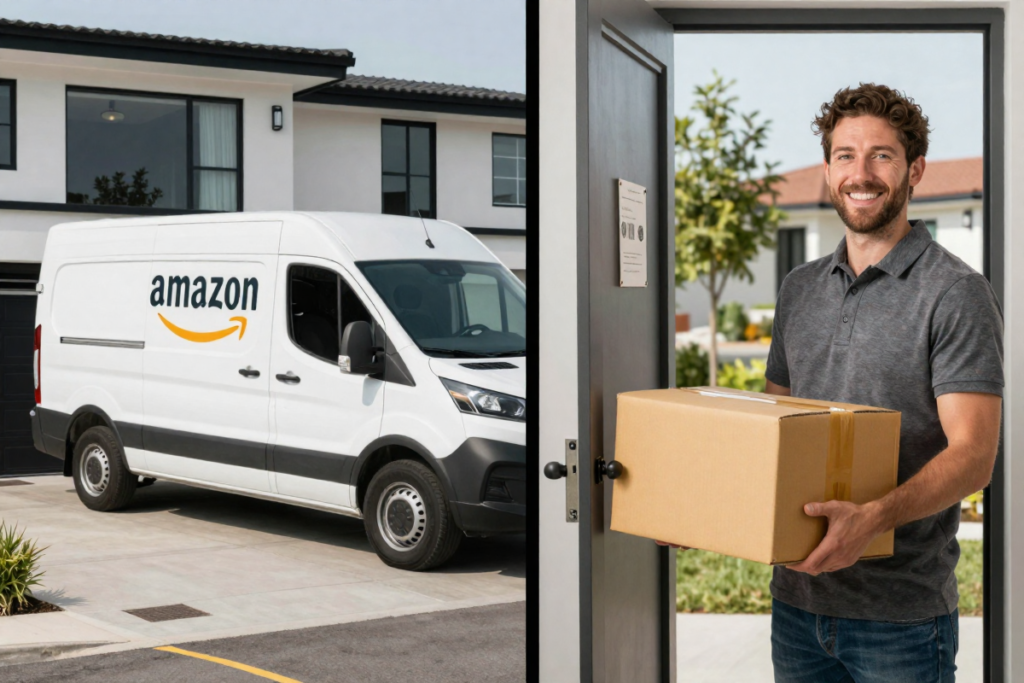
Fulfillment method doesn’t just affect your operations and costs—it directly shapes customer satisfaction, reviews, and repeat purchase rates.
Shipping Speed
FBA advantage:
Amazon Prime’s two-day (or faster) shipping sets customer expectations that FBM sellers struggle to match. In many markets, same-day delivery is becoming standard for FBA products, creating an increasingly difficult competitive gap.
FBM reality:
Even with expedited shipping, most FBM sellers operate on 3-7 day delivery timeframes. While this meets Amazon’s requirements, it fails to excite customers who’ve grown accustomed to Prime’s speed.
Returns Handling
FBA advantage:
Amazon’s hassle-free returns process—with automated return labels and multiple drop-off locations—creates a frictionless experience that increases purchase confidence, especially for new-to-brand customers.
FBM challenge:
Self-managed returns require customers to contact you for authorization, wait for return labels, and navigate less streamlined processes. This friction increases customer frustration and can result in negative feedback.
Customer Service Quality
FBA advantage:
Amazon’s 24/7 customer service team handles inquiries in multiple languages, typically responding within hours. This professional support often prevents issues from escalating to negative reviews.
FBM responsibility:
You’re personally responsible for responding to customer messages within 24 hours (Amazon’s requirement), including evenings, weekends, and holidays. Slow or inadequate responses harm your seller metrics and customer satisfaction.
Brand Experience
FBM advantage:
Self-fulfillment allows you to control the complete unboxing experience—from custom branded packaging and thank-you cards to promotional inserts that drive customers to your email list or social media channels.
FBA limitation:
Amazon’s standardized packaging prominently features Amazon branding, not yours. While this builds trust in Amazon, it does little to build your brand equity or customer loyalty beyond the platform.
Which Model Is Best for Different Sellers?
There’s no universal “best” fulfillment method—only the best choice for your specific business model, resources, and goals.

1. Beginners
Recommended: Start with FBM or hybrid
Why: Lower upfront risk
New sellers benefit from self-fulfillment’s lower financial commitment. Starting with FBM allows you to:
- Test products without expensive FBA inventory commitments
- Learn Amazon’s platform and customer expectations
- Develop product knowledge through hands-on fulfillment
- Avoid costly mistakes with FBA packaging requirements or storage fees
Transition strategy:
Once you’ve validated products and built sales history, transition proven winners to FBA while continuing to test new products via FBM.
2. Private Label Sellers
Recommended: FBA
Why: Branding + Prime advantage
Private label products compete primarily on perceived value, reviews, and visibility rather than price alone. FBA’s advantages align perfectly with private label strategy:
- Prime eligibility builds trust in unfamiliar brands
- Buy Box advantage maximizes visibility for branded products
- Professional fulfillment supports premium positioning
- Hands-free logistics allows focus on product development and marketing
Consideration:
Use FBA’s brand registry program and Amazon Transparency to protect your private label products from counterfeiting while leveraging FBA’s logistical advantages.
3. Handmade / Custom Sellers
Recommended: FBM
Why: Flexibility and customization
Products requiring customization, personalization, or special handling rarely fit FBA’s standardized model:
- Made-to-order products can’t be pre-stocked in Amazon warehouses
- Custom packaging or gift wrapping isn’t possible through FBA
- Artisan products often require special handling or quality checks
- Direct customer communication during production adds value
Alternative:
Consider selling handmade items primarily through platforms like Etsy or your own website, using Amazon as a secondary channel for ready-made products from your catalog.
4. High-Volume Sellers
Recommended: FBA or hybrid
Why: Scalability
Once you’re processing hundreds or thousands of monthly orders, FBA’s advantages compound:
- Fulfillment costs decrease as a percentage of revenue
- Time savings multiply dramatically with volume
- Amazon’s infrastructure handles complexity you’d struggle to manage
- Focus shifts to strategic growth rather than operational execution
Hybrid optimization:
High-volume sellers often develop sophisticated hybrid strategies, using FBA for core products while maintaining FBM capabilities for special circumstances, oversized items, or multi-channel integration.
When to Choose a Hybrid Approach

The most sophisticated Amazon sellers rarely use exclusively FBA or FBM—they strategically combine both methods to optimize for profitability, control, and customer experience.
Definition of Hybrid Fulfillment
A hybrid fulfillment strategy involves using both FBA and self-fulfillment simultaneously, allocating products to each method based on strategic criteria rather than treating fulfillment as an all-or-nothing decision.
Benefits of Hybrid Fulfillment
Risk diversification
Maintaining both fulfillment capabilities protects against Amazon policy changes, account issues, or inventory limits that could otherwise halt your entire business.
Inventory flexibility
When FBA storage limits restrict your inventory during Q4, you can continue selling through FBM. When you’re traveling or busy, FBA handles orders automatically while you step away.
Cost optimization
Different products have different ideal fulfillment methods. A hybrid approach allows you to optimize each SKU individually rather than accepting one-size-fits-all compromises.
Testing and transition
You can test new products via FBM before committing to FBA inventory investments, or transition seasonal products between methods as demand patterns shift.
Real-World Use Cases
Case 1: Product size optimization
A supplement seller uses FBA for standard bottles (ideal size and weight for FBA economics) but self-fulfills their bulk 180-count bottles where FBA fees would destroy margins.
Case 2: Seasonal shifting
A toy seller uses FBA year-round for their core products, but during Q4 peaks, they fulfill lower-priority items themselves to preserve FBA storage capacity for best-sellers.
Case 3: Multi-channel strategy
An electronics seller uses FBA for Amazon sales to maximize Prime visibility, but fulfills their Shopify and eBay orders from the same inventory in their warehouse, avoiding Amazon’s multi-channel fulfillment fees.
Case 4: Inventory limit workaround
When hitting FBA storage limits, a fast-growing seller continues purchasing inventory and temporarily self-fulfills while waiting for Amazon to increase their storage capacity based on sales performance.
Tools & Resources to Succeed
The right software and service providers can dramatically improve profitability and efficiency regardless of which fulfillment method you choose.
Top Tools for FBA Sellers
Product Research Tools
Understanding FBA economics before committing to products prevents costly mistakes:
👉 [JUNGLE SCOUT – FBA product research and opportunity finder]
👉 [HELIUM 10 – Comprehensive FBA seller toolkit with profitability calculator]
👉 [VIRAL LAUNCH – Product discovery and market intelligence for FBA]
Inventory Management Software
Preventing stockouts and avoiding long-term storage fees requires sophisticated inventory planning:
👉 [RESTOCK PRO – FBA inventory forecasting and restock recommendations]
👉 [INVENTORYLAB – FBA inventory management and profitability tracking]
👉 [SOSTOCKED – Inventory planning specifically for FBA sellers]
PPC and Optimization Tools
Maximizing FBA’s advantages requires visibility through effective advertising:
👉 [PERPETUA – AI-powered Amazon PPC optimization]
Top Tools for FBM Sellers
Shipping Platforms
Efficient FBM requires shipping software that integrates with Amazon and provides discounted carrier rates:
👉 [SHIP STATION – Multi-carrier shipping software with Amazon integration]
👉 [PIRATE SHIP – Deeply discounted USPS and UPS rates with simple interface]
👉 [SHIPPING EASY – Shipping automation with inventory management features]
Warehouse Management Systems
As FBM operations grow, dedicated warehouse management becomes essential:
👉 [SHIPBOB – 3PL with technology platform for FBM sellers]
👉 [FLOWSPACE – On-demand warehousing and fulfillment network]
Order Tracking and Customer Communication
Professional order tracking improves customer satisfaction and reduces support inquiries:
👉 [AFTER SHIP – Branded tracking pages and automated shipping notifications]
👉 [PARCEL PANEL – Order tracking and delivery updates for Amazon sellers]
Comparison Table: Essential Tools
| Tool Category | FBA Recommended | FBM Recommended | Purpose |
|---|---|---|---|
| Product Research | Jungle Scout, Helium 10 | Same tools work for both | Identify profitable products |
| Shipping | Not needed | ShipStation, Pirate Ship | Print labels, manage carriers |
| Inventory | RestockPro, SoStocked | SkuVault, Cin7 | Track stock, forecast demand |
| Analytics | SellerBoard, HelloProfit | Same tools work for both | Monitor profitability, fees |
| Repricing | RepricerExpress, Informed | Same tools work for both | Win Buy Box, optimize pricing |
Common Mistakes to Avoid

Learning from others’ expensive mistakes can save you thousands of dollars and months of frustration.
Choosing FBA Without Calculating Fees
The mistake:
New sellers assume FBA is always the best option without running product-specific profitability calculations. They discover too late that storage and fulfillment fees consume their entire margin.
The solution:
Use Amazon’s FBA Revenue Calculator for every product before making inventory commitments. Factor in all costs including storage fees across multiple months, long-term storage potential, and seasonal fee increases.
👉 [FBA FEE CALCULATOR – Free tool with profit modeling]
Underestimating Shipping Costs in FBM
The mistake:
FBM sellers calculate profitability using the cheapest possible shipping method, then discover that customers expect (and Amazon’s delivery promise requires) faster, more expensive shipping options.
The solution:
Build your FBM pricing around realistic shipping costs that meet customer expectations, not theoretical minimum rates. Account for dimensional weight pricing that often exceeds actual weight charges.
Ignoring Inventory Turnover
The mistake:
Sellers send large quantities to FBA without considering how long it will take to sell through inventory, resulting in devastating long-term storage fees.
The solution:
Calculate inventory turnover rates and send smaller, more frequent FBA shipments. Aim to turn inventory every 60-90 days maximum. Use FBM for slow-moving products that take 120+ days to sell.
Not Testing Both Models
The mistake:
Committing exclusively to one fulfillment method without testing how the alternative performs for your specific products and customer base.
The solution:
If you’re currently 100% FBA, test self-fulfilling one product for a month. If you’re 100% FBM, send your best-seller to FBA and compare conversion rates. Data beats assumptions.
Poor Inventory Planning
The mistake:
Sending inventory to FBA without understanding Amazon’s inventory limits, seasonal fee structures, or restock lead times, resulting in stockouts during peak demand or excessive storage fees during slow periods.
The solution:
Implement inventory management software that forecasts demand, tracks FBA storage limits, and recommends optimal restock timing and quantities.
Final Verdict: FBA vs. Self-Fulfillment
After examining costs, scalability, customer experience, and strategic considerations, here’s how to make your final decision.
Side-by-Side Summary Table
| Factor | FBA | Self-Fulfillment (FBM) |
|---|---|---|
| Upfront cost | High (inventory investment) | Low (gradual scaling possible) |
| Per-unit cost | Moderate to high fees | Variable, often lower |
| Time commitment | Very low (passive) | High (daily involvement) |
| Scalability | Excellent | Limited without infrastructure |
| Prime eligibility | Automatic | Only via Seller Fulfilled Prime |
| Brand control | Limited | Complete |
| Customer service | Handled by Amazon | Your responsibility |
| Best for | Standard products, growth focus | Custom items, niche products, brand building |
| Profit potential | High volume × moderate margins | Moderate volume × higher margins |
Key Decision Factors
Budget
- Choose FBA if: You have capital for inventory and can absorb fees while building sales velocity
- Choose FBM if: You’re bootstrapping and need to minimize upfront investment
Time Availability
- Choose FBA if: Your time is better spent on business development than fulfillment operations
- Choose FBM if: You have time for daily fulfillment and value the hands-on involvement
Business Goals
- Choose FBA if: You’re prioritizing rapid growth and scaling quickly
- Choose FBM if: You’re building a brand, testing products, or maintaining operational control
Product Characteristics
- Choose FBA if: You sell standard-size, fast-moving products with healthy margins
- Choose FBM if: You sell oversized items, slow-movers, or products requiring special handling
Clear Recommendation Framework
Choose FBA if:
- ✅ Your product is small, lightweight, and fast-selling
- ✅ Prime eligibility would significantly boost conversions in your category
- ✅ You want to scale quickly without operational bottlenecks
- ✅ You’re selling private label products competing for visibility
- ✅ Your time is more valuable spent on sourcing and marketing
- ✅ You can maintain healthy margins even after FBA fees
Choose FBM if:
- ✅ Your product is oversized, heavy, or has low margins
- ✅ You’re selling handmade, custom, or made-to-order items
- ✅ You have existing fulfillment infrastructure or available time
- ✅ Brand control and customer relationships are priorities
- ✅ You’re testing products before committing to larger inventory
- ✅ You sell across multiple channels and need unified inventory
Choose a Hybrid approach if:
- ✅ Your catalog includes both ideal-for-FBA and ideal-for-FBM products
- ✅ You want risk diversification across fulfillment methods
- ✅ You’re hitting FBA inventory limits but still growing
- ✅ You have sophisticated inventory management capabilities
- ✅ Different products have different optimal fulfillment strategies
Frequently Asked Questions (FAQs)

Is FBA worth it for beginners?
FBA can be worth it for beginners if you’ve validated your product and have sufficient capital for inventory investment. However, many new sellers benefit from starting with self-fulfillment to learn Amazon’s platform and test products before committing to FBA’s higher costs. The best approach for most beginners is testing 1-2 products via FBM, then transitioning validated winners to FBA.
Can I switch from FBM to FBA?
Yes, switching from self-fulfillment to FBA is straightforward. Simply create a new FBA shipment in Seller Central, prepare your inventory according to FBA requirements, and ship to Amazon’s warehouses. You can change the fulfillment method on existing listings without creating new ASINs. Many sellers transition products to FBA once sales velocity justifies the investment.
Which is more profitable, FBA or self-fulfillment?
Profitability depends on your specific product, sales volume, and operational efficiency. FBA typically wins for small, lightweight items with high sales velocity due to increased conversions from Prime eligibility. Self-fulfillment often proves more profitable for oversized items, slow-moving products, or situations where you have existing warehouse infrastructure. The only way to know definitively is calculating costs for your specific products.
Do I need a warehouse for FBM?
No, many successful FBM sellers operate from home, garages, or small rented spaces. You only need a warehouse when order volume exceeds what you can manage in available space. Start-ups commonly fulfill 20-50+ orders daily from residential locations before transitioning to commercial warehouse space. Third-party logistics providers (3PLs) offer an alternative to self-managed warehouses.
How do FBA storage fees work?
Amazon charges monthly storage fees based on the volume (cubic feet) your inventory occupies in their warehouses. Standard-size items cost approximately $0.87 per cubic foot from January-September and $2.40 per cubic foot during October-December. Inventory stored longer than 271 days incurs additional long-term storage fees. The exact fees vary by product size category and time of year.
Can self-fulfilled sellers qualify for Amazon Prime?
Yes, through Amazon’s Seller Fulfilled Prime (SFP) program, FBM sellers can offer Prime shipping. However, SFP has strict requirements including one-day or two-day delivery, 99% on-time delivery rate, and specific shipping carriers. Most sellers find SFP requirements challenging without sophisticated fulfillment infrastructure.
Conclusion + Call to Action
The fulfillment method you choose today shapes your Amazon business for years to come. This decision affects your daily workload, profitability, scalability, and ultimately whether you build a sustainable ecommerce business or struggle with constant operational challenges.
Key Insights Recap
- FBA excels for standard products, rapid scaling, and passive income models, despite higher per-unit costs
- Self-fulfillment wins for brand control, oversized items, and lower-volume specialty products, despite requiring hands-on involvement
- Hybrid strategies optimize profitability by strategically matching products to their ideal fulfillment method
- Your unique situation determines the right answer—there’s no universal “best” choice
Take Action Now
Don’t let analysis paralysis delay your progress. The best way to determine your ideal fulfillment strategy is testing with real data from your actual products:
- Calculate your specific costs using Amazon’s FBA calculator for your products
- Start with one method based on your current resources and goals
- Track metrics ruthlessly including conversion rates, profit margins, and time investment
- Test the alternative after 60-90 days to compare real-world results
- Optimize continuously as your business grows and circumstances change
Resources to Get Started
👉 [Comprehensive FBA/FBM decision calculator tool]
👉 [Amazon seller starter toolkit – research, shipping, and analytics tools]
Ready to make your fulfillment decision with confidence? Download our free Amazon Fulfillment Decision Flowchart that walks you through the exact questions to determine your optimal strategy based on your specific products, budget, and goals.
The most successful Amazon sellers don’t guess at fulfillment—they calculate, test, and optimize. Your competitors are making this decision right now. Make yours data-driven, strategic, and aligned with where you want your business to be in 12 months.
What’s your next step?