Passive Income Through Print-on-Demand: Myth or Reality?
October 13, 2026

“Make money while you sleep.” It’s the dream that lures thousands of entrepreneurs to print-on-demand every month. The promise is tantalizing: create designs once, upload them to a platform, and watch passive income roll in while you sip coffee on a beach somewhere.
But here’s the question nobody’s answering honestly: Is print-on-demand actually passive income, or just another online hustle dressed up in appealing packaging?
If you’ve been researching print-on-demand as a potential passive income stream, you’ve probably encountered conflicting information. YouTube success stories show creators earning $10,000+ monthly. Meanwhile, Reddit threads overflow with frustrated sellers who haven’t made a single sale after months of effort.
So what’s the truth?
In this comprehensive guide, we’ll cut through the hype and examine the reality of print-on-demand passive income. You’ll discover how POD really works, whether it’s truly passive, what you can realistically expect to earn, and proven strategies to maximize your chances of success.
Let’s separate the myth from reality.
What Is Print-on-Demand? (The Basics Explained)
Before we dive into the passive income debate, let’s establish exactly what print-on-demand means.
Print-on-demand (POD) is a business model where you sell custom-designed products without holding any inventory. When a customer places an order, a third-party supplier prints and ships the product directly to them.
How Print-on-Demand Works: A Simple 4-Step Process
- Create or source a design – This could be anything from typography quotes to illustrations or AI-generated artwork
- Upload your design to a POD platform – Platforms like Printify, Printful, or integrated marketplaces handle the technical setup
- Customer discovers and purchases your product – Through your Etsy shop, Shopify store, Amazon Merch listing, or platform marketplace
- Third-party fulfillment – The POD service prints, packages, and ships the order; you keep the profit margin
Popular Print-on-Demand Products
The POD world extends far beyond t-shirts, though apparel remains the most popular category:
- Apparel: T-shirts, hoodies, tank tops, leggings
- Accessories: Tote bags, phone cases, socks, hats
- Home & Living: Mugs, pillows, blankets, wall art
- Stationery: Journals, notebooks, planners, stickers
- Specialty Items: Yoga mats, pet products, bath mats
Recommended POD Platforms and Tools
[Printify] – One of the most popular POD platforms with competitive pricing and extensive product catalog
[Printful] – Premium quality POD service with excellent branding options and warehouse locations worldwide
[Canva Pro] – Design tool perfect for creating POD designs without professional graphic design skills
[Shopify] – E-commerce platform that integrates seamlessly with major POD suppliers
The low barrier to entry makes print-on-demand appealing. Unlike traditional retail, you don’t need thousands of dollars for inventory or warehouse space. But does low startup cost equal passive income?
Why People Believe POD Is Passive Income
The print-on-demand passive income narrative didn’t emerge from nowhere. There are legitimate reasons why POD appears to be the perfect passive income business model:
No Inventory Investment Required
Traditional retail requires purchasing inventory upfront—a significant financial risk. With POD, products only get created after customers pay for them. This zero-inventory model means minimal financial risk and no unsold stock gathering dust in your garage.
Automated Fulfillment Process
Once your store is set up, the fulfillment process runs without your direct involvement. You don’t pack boxes, visit the post office, or manage shipping logistics. The POD platform handles everything from printing to delivery.
Low Upfront Costs
Starting a print-on-demand business can cost as little as $0-50. Many platforms like Redbubble are completely free to join. Even if you invest in a Shopify store and premium design tools, you’re looking at $30-100 monthly—far less than most business ventures.
Scalability Without Proportional Effort
This is where the passive income appeal becomes strongest. In theory, selling 10 products versus 1,000 products requires the same amount of work from you. The POD platform scales the production automatically.
Influence of Success Stories
YouTube, TikTok, and Instagram overflow with creators showcasing impressive print-on-demand earnings. These success stories—”I made $5,000 in my first month!”—fuel the perception that POD is easy passive income.
But here’s what those success stories often omit: the hours spent on design creation, market research, SEO optimization, and paid advertising that made those results possible.
The Reality: Is Print-on-Demand Truly Passive Income?
Now for the honest truth that separates realistic expectations from fantasy.
Print-on-demand is semi-passive income at best, not fully passive income.
Let me explain the difference.
Understanding “Passive” vs “Active” Work in POD
Truly passive income requires minimal ongoing effort after initial setup. Think dividend-paying stocks, rental properties managed by a property management company, or royalties from a book published years ago.
Print-on-demand requires continuous active work in several areas:
Upfront Work Required
Niche Research – You can’t just design random products and expect sales. Profitable niches require research into trends, competition analysis, and understanding target audiences. This process can take weeks.
Design Creation – Whether you create designs yourself or outsource them, each product requires thoughtful design work. Creating 50-100 designs (the minimum for meaningful traction) represents significant upfront investment.
Store Setup and Optimization – Building a Shopify store, optimizing Etsy listings, or setting up Amazon Merch accounts involves technical work, copywriting, and SEO optimization.
Ongoing Work That Never Stops
Here’s where the “passive” myth completely breaks down:
Marketing and Traffic Generation – This is the biggest time commitment. Without traffic, even the best designs won’t sell. You’ll need to invest time in:
- SEO optimization for Etsy and Google
- Pinterest marketing
- Instagram and TikTok content creation
- Running and optimizing paid ads (Facebook, Google)
- Building email lists
Customer Service – While you don’t handle fulfillment, you still manage customer inquiries, complaints about print quality, size issues, and occasionally refunds or replacements.
Trend Monitoring – Print-on-demand niches evolve rapidly. What sells today might be saturated tomorrow. Staying profitable requires monitoring trends and refreshing your product lineup.
Design Updates and Testing – Successful POD sellers constantly test new designs, products, and niches. This testing process never truly ends.
Competition Analysis – The POD space grows more competitive monthly. Maintaining sales requires keeping tabs on competitors and adapting strategies.
The Semi-Passive Reality
Print-on-demand becomes semi-passive once you’ve built momentum. After investing significant upfront work and establishing traffic sources, individual products can generate sales with minimal ongoing attention.
A realistic POD income progression:
- Months 1-3: Mostly active work, minimal income
- Months 4-6: Heavy active work, modest income beginning
- Months 7-12: Moderate active work, growing income
- Year 2+: Lighter ongoing work, more consistent income
Even established POD sellers typically spend 5-15 hours weekly managing their businesses.
How POD Compares to Other Income Models
| Income Model | Upfront Work | Ongoing Work | Passive Rating |
|---|---|---|---|
| Print-on-Demand | High | Moderate | Semi-Passive (5/10) |
| Blogging | Very High | Moderate | Semi-Passive (6/10) |
| Dividend Investing | Low | Very Low | Highly Passive (9/10) |
| Affiliate Marketing | High | Low-Moderate | Semi-Passive (7/10) |
| Traditional Dropshipping | Moderate | High | Active Business (3/10) |
The verdict: Print-on-demand is more passive than running a traditional retail business or active freelancing, but significantly less passive than investments or established digital assets.
Pros and Cons of Print-on-Demand
Let’s evaluate print-on-demand objectively by examining both advantages and disadvantages.
Advantages of Print-on-Demand
Low Risk Business Model – With no inventory investment, your financial risk remains minimal. If a design doesn’t sell, you’ve only invested your time, not thousands in unsold stock.
No Inventory Management Headaches – Forget warehousing, stock rotation, or dealing with unsold inventory. The POD model eliminates these traditional retail challenges entirely.
Accessible for Complete Beginners – You don’t need business experience, substantial capital, or technical expertise to start. The learning curve exists but isn’t insurmountable.
Flexible and Scalable – Work from anywhere with internet access. Scale your product catalog from 10 designs to 1,000 without proportionally increasing your workload.
Creative Outlet – For artistic individuals, POD provides a platform to monetize creativity while building a business.
Multiple Revenue Streams Possible – Diversify across platforms (Etsy, Amazon Merch, Redbubble) and product types to reduce dependency on any single channel.
Disadvantages of Print-on-Demand
Intense Competition – The low barrier to entry attracts thousands of new sellers monthly. Standing out requires exceptional designs, marketing, or niche selection.
Thin Profit Margins – POD profit margins typically range from $2-10 per product. High-volume sales are necessary for substantial income, requiring significant traffic.
Marketing Skills Essential – This cannot be overstated: marketing determines POD success more than design quality. Without traffic generation skills, even beautiful designs won’t sell.
Platform Dependency Risks – Relying on Etsy, Amazon, or Redbubble means you’re subject to algorithm changes, policy updates, and potential account suspensions beyond your control.
Quality Control Limitations – You can’t personally inspect products before they ship. Occasional quality issues can damage your brand reputation.
Production and Shipping Times – POD products take longer to produce and ship than Amazon Prime. Customer expectations around fast delivery can create challenges.
Limited Customization – You’re constrained by what POD platforms offer. You can’t create entirely unique products without switching to traditional manufacturing.
How Much Money Can You Realistically Make with Print-on-Demand?
This is the question everyone wants answered. Unfortunately, “it depends” is the only honest answer—but let’s add helpful context.
Realistic Income Ranges by Experience Level
Beginners (Months 1-6): $0-100/month
Most new POD sellers earn little to nothing in their first few months. This isn’t failure—it’s the reality of building any online business. You’re learning design, platforms, SEO, and marketing while building your initial product catalog.
Intermediate Sellers (6-18 months): $500-2,000/month
After establishing momentum, developing marketing skills, and building a substantial catalog, modest monthly income becomes achievable. This typically requires 100+ designs across multiple niches and consistent traffic generation efforts.
Advanced Sellers (18+ months): $5,000-20,000+/month
Experienced POD entrepreneurs who’ve mastered niche selection, design trends, and marketing can build substantial businesses. However, this level typically requires treating POD as a full-time business, not a side hustle.
The 1% (Top Performers): $20,000-100,000+/month
A small percentage of POD sellers build six-figure businesses. These outliers combine exceptional design sense, marketing expertise, team outsourcing, and often paid advertising budgets.
Critical Factors Influencing Print-on-Demand Income
Niche Selection – This single factor impacts success more than any other. Profitable niches balance search demand with manageable competition. Choosing oversaturated niches (generic cat designs) or ultra-obscure niches (left-handed underwater basket weaving enthusiasts) both limit income potential.
Design Quality and Uniqueness – Simple doesn’t mean lazy. Successful POD designs strike a balance between visual appeal and production simplicity. Designs that clearly communicate to specific audiences outperform generic artwork.
Traffic Sources and Volume – Without eyeballs on your products, nothing sells. Diversified traffic from organic search, social media, and optionally paid ads creates stable income.
Pricing Strategy – Race-to-the-bottom pricing rarely succeeds in POD. Positioning products at moderate-to-premium price points with strong value communication generally outperforms competing purely on price.
Platform Selection – Each platform offers different trade-offs:
- Etsy: Great organic traffic potential but requires strong SEO
- Amazon Merch: Massive customer base but highly competitive
- Redbubble: Easy to start but lower profit margins
- Shopify: Full control but requires driving your own traffic
Consistency and Volume – Success correlates strongly with catalog size and upload consistency. Sellers with 500+ designs typically earn more than those with 50, assuming reasonable quality.
What Success Really Looks Like
Instead of focusing on headline-grabbing income figures, consider these realistic success markers:
- Month 3: First sale (a genuinely exciting milestone)
- Month 6: Consistent weekly sales ($200-400 monthly income)
- Month 12: Daily sales with multiple bestsellers ($1,000-2,000 monthly)
- Month 18: Semi-passive income supplementing primary income ($2,000-4,000 monthly)
- Month 24+: Potential full-time income with established systems ($4,000-8,000+ monthly)
Best Print-on-Demand Platforms Compared
Choosing the right platform significantly impacts your POD success. Here’s an honest comparison of top options:
Platform-by-Platform Analysis
Best For: Entrepreneurs wanting full brand control and long-term business building
Pros:
- Complete customization and branding control
- Own your customer data and email list
- No platform policy uncertainty
- Professional appearance builds trust
Cons:
- Requires driving your own traffic (biggest challenge)
- Monthly costs ($29+ for Shopify)
- Steeper learning curve
Profit Margins: $5-15+ per product (you set prices)
[Etsy]
Best For: Beginners wanting built-in marketplace traffic
Pros:
- Massive existing customer base searching for unique products
- Strong organic search potential with proper SEO
- Lower startup costs (listing fees only)
- Ideal for testing designs and niches
Cons:
- Increasing competition and fees
- Algorithm changes affect visibility
- Platform policy dependency
- Customer service expectations high
Profit Margins: $3-10 per product after fees
Best For: Sellers comfortable with high competition for massive audience access
Pros:
- Unmatched customer traffic and buying intent
- Amazon handles everything including customer service
- Potential for high-volume sales
- Prime eligibility builds trust
Cons:
- Application approval required (often waitlist)
- Extremely competitive environment
- Limited design visibility and control
- Royalty-based pricing (lower margins)
- Strict content policies
Profit Margins: $2-6 per product (royalty-based)
Best For: Complete beginners wanting zero-risk entry
Pros:
- Completely free to start and operate
- No marketing required initially (marketplace traffic)
- Huge product variety (50+ products from single design)
- Simple upload process
Cons:
- Lowest profit margins of major platforms
- Less control over pricing
- High marketplace competition
- Difficult to build recognizable brand
Profit Margins: $1-5 per product
Platform Comparison Table
| Platform | Startup Cost | Traffic Source | Profit Margin | Competition | Best For |
|---|---|---|---|---|---|
| Shopify + POD | $30-100/mo | Self-driven | High ($5-15) | Moderate | Brand builders |
| Etsy | $0.20/listing | Marketplace + SEO | Medium ($3-10) | High | Beginners |
| Amazon Merch | Free | Marketplace | Low-Medium ($2-6) | Very High | Volume sellers |
| Redbubble | Free | Marketplace | Low ($1-5) | Very High | Testing/Hobbyists |
Platform Strategy Recommendation
Don’t put all your eggs in one basket. Successful POD sellers typically diversify across multiple platforms:
- Start with Redbubble or Etsy to validate designs with minimal risk
- Add Amazon Merch once approved to access massive traffic
- Build a Shopify store long-term for brand equity and customer ownership
[Alternative Print-On-Demand Services: TeeLaunch, Printful, Gelato]
[Alternative to Shopify: WordPress + WooCommerce + Web Hosting]
How to Succeed with Print-on-Demand: 8 Actionable Strategies
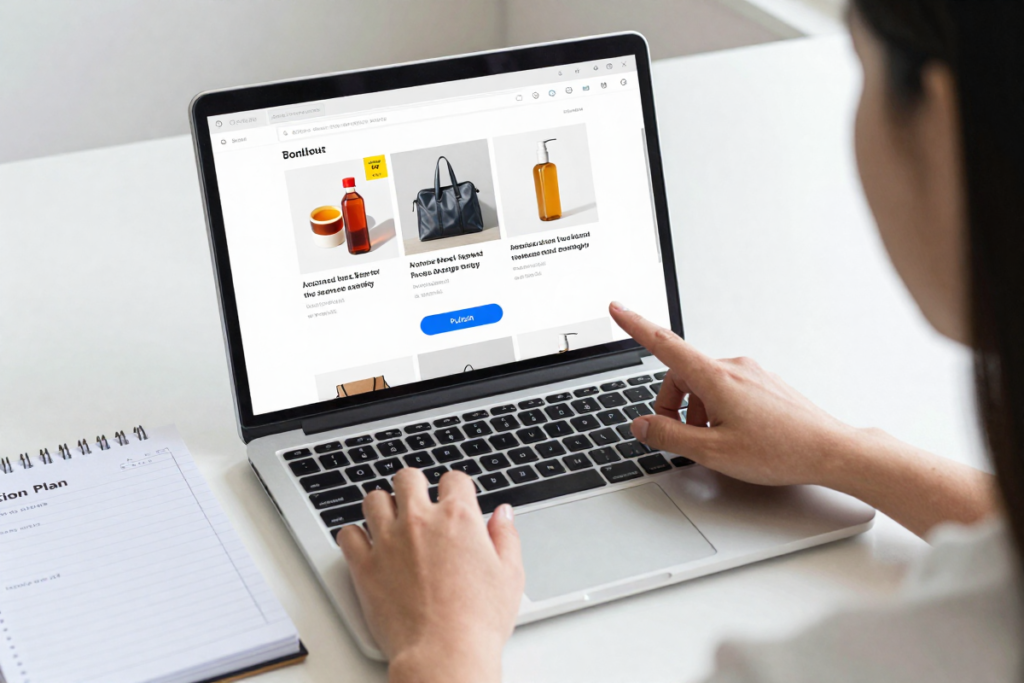
Now let’s move from theory to practice. Here are proven strategies for building profitable print-on-demand income:
1. Choose a Profitable Niche (Not Just Your Passion)
The “follow your passion” advice sounds inspiring but often leads to disappointing results in POD.
Better approach: Find the intersection between:
- Niches with proven buyer demand
- Areas with manageable competition
- Topics you can create multiple designs for
Examples of strong POD niches:
- Specific hobbies (pickleball, RV camping, specific dog breeds)
- Professional groups (teachers, nurses, specific trades)
- Lifestyle identities (plant parents, book lovers, minimalists)
- Special interests (true crime enthusiasts, astronomy fans)
Red flag niches to avoid:
- Oversaturated generic topics (generic cat quotes, basic mom/dad designs)
- Trademark-heavy areas (specific sports teams, copyrighted characters)
- Ultra-narrow niches without search volume
[Niche research tool or keyword research software]
2. Prioritize Design Quality (Simple Often Wins)
Contrary to beginner assumptions, complex designs don’t automatically sell better.
Design principles that actually convert:
Clear Message – Your design’s purpose should be immediately obvious. Viewers make purchase decisions in 2-3 seconds.
Simple Typography – Text-based designs consistently perform well in POD. Clean fonts with clever sayings outperform elaborate graphics in many niches.
Print-Friendly – Designs should work across multiple products. Avoid tiny details that disappear when printed or overly complex color gradients.
Target Audience Specificity – Designs that speak directly to specific audiences (“Pickleball Grandma” versus generic “Grandma”) generate stronger emotional connections and higher conversion rates.
3. Use Tools or Outsource if You’re Not a Designer
You don’t need professional graphic design skills to succeed in POD.
Design Tool Options:
[Canva Pro] – Beginner-friendly design platform with templates, fonts, and elements perfect for POD
[Adobe Illustrator] – Professional vector design software for those willing to invest learning time
AI Design Tools – Platforms like Midjourney or DALL-E can generate unique artwork, though copyright and platform policy questions remain evolving
Outsourcing Platforms:
- [Fiverr] – Find affordable designers for custom work ($5-50 per design)
- [Upwork] – Hire experienced designers for ongoing projects
Strategy tip: Start creating simple designs yourself to learn what sells, then outsource volume production once you’ve validated profitable niches.
4. Master SEO (Especially for Etsy and Google)
Marketing determines POD success more than design quality. SEO provides free, sustainable traffic.
Etsy SEO Fundamentals:
Keyword Research – Use tools like eRank or Marmalead to find search terms with demand but manageable competition
Title Optimization – Front-load titles with primary keywords: “Funny Pickleball Shirt | Pickleball Player Gift | Dink Responsibly Tee”
Tag Strategy – Use all 13 tags with relevant variations and long-tail keywords
Description Optimization – Include keywords naturally while providing helpful product information
Google Shopping SEO:
For Shopify stores, optimize product pages for Google Shopping:
- Descriptive, keyword-rich product titles
- Detailed descriptions answering common questions
- High-quality product mockups
- Customer reviews (build over time)
5. Leverage Free Traffic Sources
Paid advertising can accelerate POD growth, but free traffic sources provide sustainable foundations.
Pinterest – Perhaps the most underutilized POD traffic source. Pinterest users actively search for products to buy.
Strategy:
- Create attractive product pins with descriptions
- Use relevant keywords in pin titles and descriptions
- Post consistently (3-5 pins daily)
- Link directly to product pages
TikTok – Short-form video showcasing products can go viral, driving massive traffic spikes.
Strategy:
- Show products in use or being unboxed
- Create content around niche interests (not just product promotion)
- Use trending audio and hashtags
- Include store link in bio
Instagram – Visual platform perfect for showcasing POD products.
Strategy:
- Build niche-specific accounts
- Use Stories and Reels for engagement
- Hashtag research for discoverability
- Collaborate with micro-influencers in your niche
6. Build a Brand, Not Just Random Designs
The most successful POD sellers create cohesive brands rather than uploading disconnected designs.
Brand-Building Elements:
Consistent Visual Style – Develop recognizable aesthetic across your designs (color palettes, typography choices, design styles)
Clear Target Audience – Focus on specific demographics rather than trying to appeal to everyone
Cohesive Product Lines – Create design families that work together, encouraging multiple purchases
Brand Story – Develop narrative around why your products exist and who they serve
Example: Instead of “Random Funny Quotes Store,” create “WittyNurse – Designs by Nurses, for Nurses” with consistent humor style and nursing-specific references.
7. Test Aggressively, Scale What Works
Print-on-demand rewards experimentation and data-driven decision-making.
Testing Framework:
- Upload 20-30 designs in a niche to gather initial data
- Monitor performance metrics (views, favorites, sales) for 30-60 days
- Identify top performers (typically 10-20% of designs drive 80% of sales)
- Create variations of successful designs
- Expand successful niches while discontinuing poor performers
- Repeat the cycle continuously
Track key metrics:
- View-to-sale conversion rate
- Average order value
- Customer acquisition cost (if running ads)
- Bestsellers by niche, product type, and season
8. Build Email Lists for Long-Term Growth
While most POD sellers ignore email marketing, it creates sustainable competitive advantages.
Email List Strategy:
Lead Magnets – Offer niche-specific free resources in exchange for emails:
- Design collections
- Guides related to your niche
- Exclusive discounts
Segmentation – Organize subscribers by interests and purchase history for relevant promotions
Automation – Set up welcome sequences and abandoned cart emails
Regular Communication – Send value-driven emails (not just sales pitches) to maintain engagement
[Email marketing platform like ConvertKit or Klaviyo]
Common Mistakes Beginners Make (And How to Avoid Them)

Learning from others’ mistakes accelerates your POD success. Here are critical errors to avoid:
Choosing Oversaturated Niches
The Mistake: Creating generic designs in massively competitive niches (funny cat quotes, basic “mama bear” designs, generic motivational quotes).
Why It Fails: These niches are dominated by established sellers with thousands of reviews and proven designs. Breaking through requires exceptional marketing budgets or design quality.
The Solution: Choose sub-niches within broader categories. Instead of “dog lover,” target “German Shepherd owner,” “rescue dog advocate,” or “senior dog parent.”
Uploading Low-Quality or Rushed Designs
The Mistake: Prioritizing quantity over quality, uploading quickly-made designs without refinement.
Why It Fails: POD platforms reward engagement (favorites, clicks, sales). Poor designs generate zero engagement, harming your overall store visibility.
The Solution: Focus on fewer, higher-quality designs rather than rushing to hit arbitrary upload numbers. Twenty excellent designs outperform 100 mediocre ones.
Expecting Instant Results
The Mistake: Uploading 10-20 designs and expecting immediate sales, then quitting after two weeks.
Why It Fails: Print-on-demand success requires time for algorithms to index listings, SEO to gain traction, and customers to discover products.
The Solution: Set realistic timelines (6-12 months for meaningful traction) and commit to consistent effort rather than expecting overnight success.
Ignoring Marketing Entirely
The Mistake: Believing “if I upload designs, sales will come” without any traffic generation efforts.
Why It Fails: Even on marketplace platforms like Etsy, competition means passive discovery rarely happens for new sellers. Your designs are invisible without marketing.
The Solution: Dedicate 50%+ of your POD time to marketing activities: SEO optimization, social media, Pinterest, content creation, or paid ads.
Not Testing Enough Products or Niches
The Mistake: Creating designs in only one niche or one product type, limiting potential markets.
Why It Fails: Niche profitability varies dramatically. What seems promising may have no actual buyer demand, while unexpected niches might outperform.
The Solution: Test 5-10 different niches simultaneously with small design batches (5-10 designs each), then double down on winners.
Copyright and Trademark Violations
The Mistake: Using copyrighted phrases, trademarked terms, celebrity names, or copyrighted images without permission.
Why It Fails: Platform account termination, legal threats, and permanent business damage. POD platforms aggressively police intellectual property violations.
The Solution: Create 100% original designs or use properly licensed elements. When in doubt, don’t use it. Research trademark databases before using phrases.
Print-on-Demand vs. Other Passive Income Models

How does POD stack up against alternative passive income strategies?
Print-on-Demand vs. Blogging
Similarities: Both require significant upfront work before income materializes, benefit from SEO, and can become semi-passive over time.
Blogging Advantages:
- Higher income ceiling through diversified monetization
- Builds lasting digital asset with equity value
- Less dependency on platforms
POD Advantages:
- Faster time to first income
- Visual creativity versus writing requirement
- Less content creation volume needed
Verdict: Blogging offers higher long-term passive potential but requires greater upfront investment. POD reaches profitability faster but caps at lower income levels.
Print-on-Demand vs. Affiliate Marketing
Similarities: Both leverage existing platforms and infrastructure, require marketing skills, and scale without inventory.
Affiliate Marketing Advantages:
- Higher profit margins per sale
- No product creation required
- Unlimited product variety
POD Advantages:
- Own your brand and products
- Control pricing and positioning
- Creative expression opportunity
Verdict: Affiliate marketing can be more passive and profitable for skilled marketers, but POD offers better brand-building potential.
Print-on-Demand vs. Traditional Dropshipping
Similarities: No inventory holding, third-party fulfillment, e-commerce business model.
Traditional Dropshipping Advantages:
- Higher profit margins per item
- Wider product selection
- Faster shipping times possible
POD Advantages:
- Unique products (not competing on identical items)
- Simpler supplier relationships
- Lower customer service burden
Verdict: POD is more passive than traditional dropshipping due to automated production and reduced customer service needs.
Print-on-Demand vs. Digital Products
Similarities: Low production costs, scalable without additional work, online delivery.
Digital Products Advantages:
- Instant delivery
- 95-100% profit margins
- No third-party dependencies
POD Advantages:
- Physical products have different appeal
- Less piracy risk
- Multiple platforms provide built-in traffic
Verdict: Digital products are more passive and profitable but require different skill sets. POD offers easier entry for beginners.
Is Print-on-Demand Worth It in 2026?
The POD landscape continues evolving. Here’s the current state and future outlook:
Current Market Trends
AI Design Tools Impact – AI image generation democratizes design creation, lowering barriers but potentially increasing competition. Successful sellers will combine AI capabilities with marketing expertise and niche knowledge.
Increasing Competition – More sellers enter POD monthly, but most still make critical mistakes. Quality execution and strategic niche selection remain competitive advantages.
Platform Evolution – Major platforms continuously update algorithms, fees, and policies. Diversification across platforms mitigates these risks.
Sustainability Focus – Consumers increasingly value ethical and environmental considerations. POD’s on-demand production model aligns with anti-waste values.
Personalization Demand – Generic mass-market products lose appeal as consumers seek unique, identity-expressing items—POD’s strength.
Who Should Start Print-on-Demand in 2026?
POD Makes Sense For:
- Creative individuals seeking to monetize artistic skills
- Digital marketers wanting to apply SEO/social media expertise
- Side hustlers looking for location-independent income
- Entrepreneurs testing business concepts with minimal risk
- Niche enthusiasts wanting to serve specific communities
POD Probably Isn’t Right For:
- People expecting passive income without marketing work
- Those seeking immediate income (bills due next month)
- Entrepreneurs without patience for 6-12 month ramp-up periods
- Individuals avoiding all technical learning (basic design/platform skills required)
Realistic Outlook
Print-on-demand remains a viable business model in 2026, but success requires realistic expectations:
It’s not: A get-rich-quick scheme, fully passive income, or guaranteed success
It is: A legitimate semi-passive business requiring marketing skills, consistent effort, and strategic execution
The most successful POD sellers treat it as a real business requiring professional effort, not a hobby generating automatic income.
Final Verdict: Passive Income Myth or Reality?
After examining print-on-demand from every angle, here’s the honest conclusion:
The Myth
Print-on-demand is NOT fully passive income. The “upload designs and watch money flow in while you sleep” narrative is misleading marketing, not reality.
Creating a profitable POD business requires:
- Significant upfront work (research, design, setup)
- Ongoing marketing efforts (the difference between success and failure)
- Continuous optimization, testing, and trend monitoring
- Customer service and business management
The Reality
Print-on-demand IS scalable semi-passive income with the right approach and expectations.
Once established, POD businesses generate income with moderate ongoing effort—more passive than active work like freelancing or service businesses, less passive than true investments.
The “passive” element emerges from:
- Automated fulfillment and production
- Evergreen designs that sell repeatedly
- Platform algorithms discovering your products
- Systems and processes reducing required time
Final Recommendation
Start print-on-demand if:
- You’re willing to invest 6-12 months building foundations
- You can dedicate time to learning marketing (especially SEO or social media)
- You seek semi-passive income supplementing other sources
- You want creative business with minimal financial risk
Skip print-on-demand if:
- You need immediate income for urgent expenses
- You expect genuine passive income without ongoing work
- You’re unwilling to learn basic design and marketing skills
- You give up easily when results don’t come immediately
Print-on-demand offers a genuine opportunity to build income that becomes increasingly passive over time—but it’s a business requiring real work, not a passive income hack.
Ready to Start Your Print-on-Demand Journey?
If you’ve decided POD aligns with your goals and expectations, here’s how to begin:
Immediate Action Steps
- Choose your first platform – Start with Etsy or Redbubble for lowest barrier to entry
- Research profitable niches – Use Keyword research tool to identify opportunities
- Create or source your first 10 designs – Use Canva Pro or hire designers on Fiverr
- Set up your POD integrations – Connect Printify or Printful to your chosen platform
- Optimize listings for SEO – Implement keyword research in titles, tags, and descriptions
- Launch your first marketing efforts – Start Pinterest account or create first TikTok videos
Recommended Tools and Platforms
POD Platforms:
- [Printify] – Best for variety and competitive pricing
- [Printful] – Best for quality and branding options
Design Tools:
- [Canva Pro] – Easiest for beginners
- [Adobe Creative Cloud] – Professional design suite
E-Commerce Platforms:
Marketing Tools:
Print-on-demand isn’t passive income in the traditional sense, but it offers a realistic path to building scalable semi-passive income with the right effort and expectations.
The question isn’t whether POD is truly passive—it’s whether you’re willing to put in the work to build a business that becomes increasingly passive over time.
Are you ready to start?
Frequently Asked Questions About Print-on-Demand Passive Income
Is print-on-demand actually passive income or does it require ongoing effort?
Print-on-demand is semi-passive, not fully passive. While automated fulfillment handles production and shipping, successful POD businesses require ongoing marketing, design updates, trend monitoring, and customer service. The business becomes more passive over time as systems and traffic sources establish themselves.
How much money can you realistically make with print on demand?
Beginners typically earn $0-100 monthly in their first 3-6 months. Intermediate sellers (6-18 months) can achieve $500-2,000 monthly. Advanced sellers treating POD as a full-time business can reach $5,000-20,000+ monthly. Income depends heavily on niche selection, design quality, marketing efforts, and platform choice.
How long does it take to start earning passive income from print on demand?
Most sellers see their first sale within 2-8 weeks but don’t achieve meaningful passive income for 6-12 months. This timeline assumes consistent effort uploading quality designs and implementing marketing strategies. Treating POD as a long-term business rather than a quick money scheme dramatically improves success odds.
Do you need design skills to succeed in print on demand?
No. You can use beginner-friendly tools like Canva, leverage AI design generators, or outsource design work on platforms like Fiverr and Upwork. Many successful POD sellers use simple text-based designs that don’t require professional graphic design skills.
What are the best print-on-demand platforms for beginners?
Etsy offers the easiest entry for beginners with built-in marketplace traffic and low startup costs. Amazon Merch on Demand provides access to massive audiences but has high competition. Shopify with Printful/Printify integration offers the most control but requires driving your own traffic.
Is the print-on-demand market oversaturated in 2026?
While competition has increased, most POD sellers still make critical mistakes (poor niche selection, weak marketing, low-quality designs). Strategic niche targeting, quality execution, and effective marketing create sustainable competitive advantages despite increased seller numbers.
Disclaimer: This article contains affiliate links. If you purchase an item through the link I will earn a small commission at no extra cost to you.